Camel Racing in the UAE: A Practical Guide to a Desert Tradition
Watching camels thunder down the track is a highlight of any visit to the Emirates. Here’s what to know before you go.
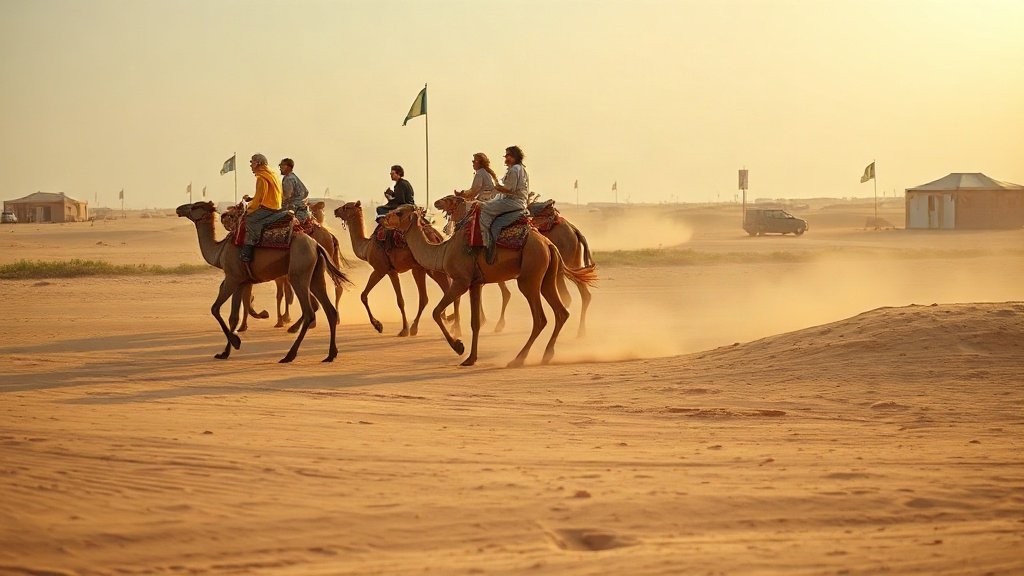
Illustration: AI-generated image
Camel racing is one of the oldest sports in the Arabian Peninsula, with deep roots in Bedouin culture. What began as informal races during gatherings and celebrations has evolved into a highly organised sport, with purpose-built tracks, cutting-edge technology, and some of the most valuable camels in the world. For visitors to the UAE, a morning at the races offers a unique glimpse into the region’s heritage.
The sport’s history stretches back centuries, when Bedouin tribes raced camels as part of celebrations and to test the endurance of their animals. Today, the UAE has invested heavily in the sport, building state-of-the-art tracks and organising major races with substantial prizes. The racing season runs from late autumn to early spring, when temperatures are pleasant.
Where to see camel racing
Two of the most accessible tracks are Al Wathba Camel Racetrack near Abu Dhabi and Al Marmoom Camel Racetrack in Dubai. Both host regular races during the cooler months, typically from October to March, usually on Friday mornings. Entry is free, and spectators can watch from the grandstand or along the trackside. No advance booking is required.
What to expect at the races
Modern camel racing has embraced technology. Since 2002, lightweight robotic jockeys controlled remotely by owners have replaced human riders. The camels race at speeds up to 40 km/h over distances of four to ten kilometres. Owners follow in cars along a parallel road, giving commands through speakers mounted on the robots. The atmosphere is festive, with families and friends gathering for the morning. Unlike horse racing, there is no betting, as gambling is prohibited in Islam. The sport remains a source of national pride and a link to Bedouin traditions.
Practical tips for visitors
- Arrive early, around 7 am, as races often start soon after sunrise.
- Bring water, a hat, and sunscreen; there is little shade trackside.
- Dress modestly, covering shoulders and knees, out of respect for local customs.
- Photography is generally allowed, but avoid photographing local families without permission.
- Combine your visit with a trip to a camel market or a heritage village for a fuller cultural experience.
Whether you are a first-time visitor or a long-time resident, witnessing the power and grace of racing camels is an unforgettable part of any UAE itinerary.