Bezar: A Guide to the Gulf's Aromatic Spice Blend
Bezar is a warm, earthy spice blend used across the UAE and Oman to flavour rice, meat and stews. Learn what goes into it and how to use it in your kitchen.
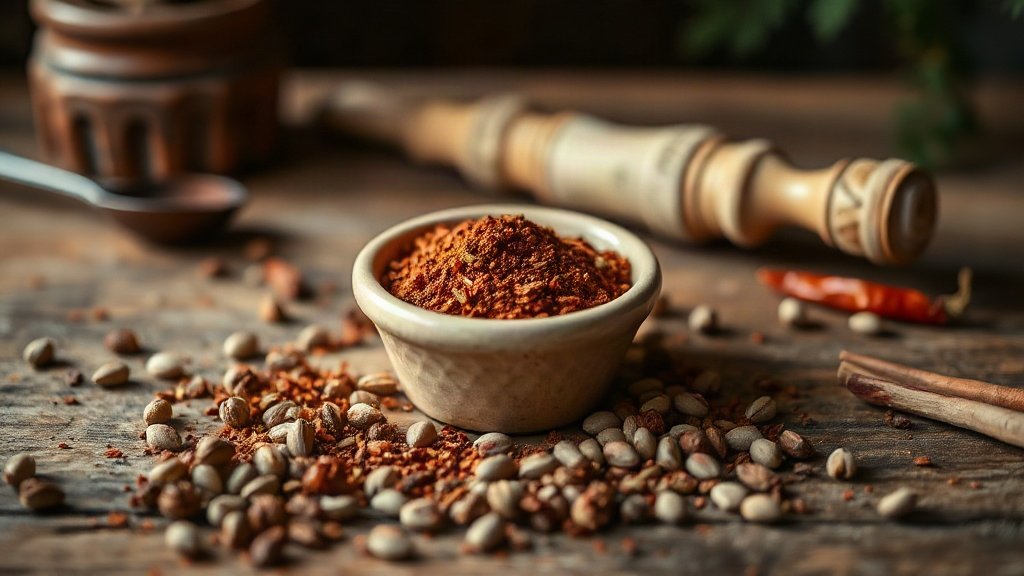
Illustration: AI-generated image
Walk into any traditional Emirati or Omani kitchen and you will likely find a jar of bezar, a rust-coloured spice blend that brings depth and warmth to countless Gulf dishes. Though less famous internationally than baharat or garam masala, bezar is a cornerstone of local cooking, prized for its earthy, slightly peppery flavour with a gentle kick of heat.
What is Bezar?
Bezar (sometimes spelled bzar or bezar) is a ground spice mixture used primarily in the United Arab Emirates and Oman. The name comes from the Arabic word for 'spice' or 'seasoning', and the blend is thought to have been influenced by historic trade links with India and East Africa. Unlike baharat, which often leans on sweet spices like allspice and nutmeg, bezar is more savoury and piquant, with cumin and black pepper at its heart.
Every family has its own version, but a typical bezar includes cumin seeds, coriander seeds, black peppercorns, turmeric, cardamom, cinnamon, cloves and dried red chillies. Some cooks add fennel seeds, dried ginger or a little nutmeg. The spices are dry-roasted to intensify their oils, then ground to a fine powder. The result is a fragrant blend that is both robust and versatile.
How to Use Bezar
Bezar is the secret behind many beloved Gulf dishes. It is commonly rubbed onto meat or chicken before grilling or roasting, stirred into rice dishes like machboos and mandi, and added to slow-cooked stews such as saloona and margoog. A spoonful can transform a simple lentil soup or even scrambled eggs into something distinctly local.
For a quick weeknight meal, mix a teaspoon of bezar with yoghurt, garlic and lemon juice to marinate fish or prawns before pan-frying. Or toss boiled potatoes with olive oil and bezar before roasting for an easy side dish with a Gulf twist. Because the blend already contains salt? (Actually it typically does not include salt, so you can season separately.) Note: Bezar is usually salt-free, so adjust your seasoning as needed.
Making Your Own Bezar
While ready-made bezar is widely available in Gulf supermarkets, making your own at home is straightforward and lets you control the heat level. Start with equal parts cumin seeds, coriander seeds and black peppercorns, then add half as much turmeric and a smaller amount of cardamom, cinnamon and cloves. For heat, include a few dried red chillies, but remove the seeds if you prefer a milder blend.
Toast the whole spices in a dry pan over medium heat for two to three minutes until fragrant, shaking the pan often. Let them cool completely, then grind to a fine powder using a spice grinder or mortar and pestle. Store the bezar in an airtight jar away from direct sunlight, and use it within three months for the best flavour.
Whether you are recreating a classic Gulf recipe or simply want to add a new dimension to your cooking, bezar is a simple way to bring the taste of the Emirates and Oman to your table.