Aliko Dangote Opens $2.5bn Fuel Storage Site in Namibia
Nigerian billionaire Aliko Dangote has launched a $2.5 billion oil tank farm at Walvis Bay, aimed at boosting Southern Africa's fuel security.
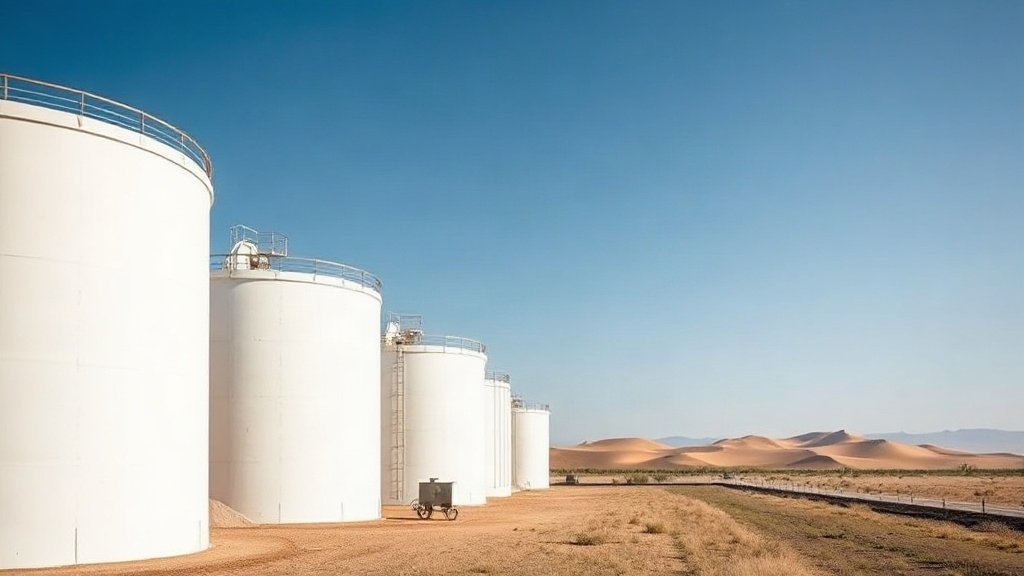
Illustration: AI-generated image
Nigerian billionaire Aliko Dangote has launched a $2.5 billion fuel storage facility at Walvis Bay in Namibia, a project intended to strengthen energy security across Southern Africa.
The new tank farm, unveiled on Thursday according to a video report from Al Jazeera, is the latest addition to Dangote's expanding portfolio of oil and gas ventures on the continent. The businessman, widely regarded as Africa's richest person, has been steadily increasing his focus on energy infrastructure. His investments span several African countries, reflecting a broader trend of private capital flowing into critical infrastructure.
Walvis Bay is a major deep-water port on Namibia's Atlantic coast, handling a large share of the country's imports and exports. Its deep berths can accommodate large tankers, making it an ideal location for receiving and storing fuel shipments. The facility will allow petrol, diesel and other fuels to be held in reserve and distributed to Namibia and neighbouring countries when needed.
A tank farm is a collection of large storage containers used to hold liquid fuels before they are transported by road, rail or pipeline. Building additional storage capacity is seen as a practical way to guard against shortages caused by shipping delays or sudden demand spikes.
By increasing storage capacity, the project aims to reduce the impact of supply disruptions and help stabilise fuel availability across the region. For Namibia and its landlocked neighbours, reliable fuel storage is essential for transport, industry and power generation. The $2.5 billion investment is described as a step toward future-proofing Southern Africa's fuel supply, according to the report. The launch marks a notable private investment in Namibia's energy sector and is expected to support regional trade and logistics. Details on storage capacity and operational timelines were not included in the video report.