Al-Taghrooda: The Bedouin Camel-Riding Chant of the Gulf
Discover the ancient art of Al-Taghrooda, the traditional sung poetry of Gulf Bedouin camel caravans, now recognised by UNESCO.
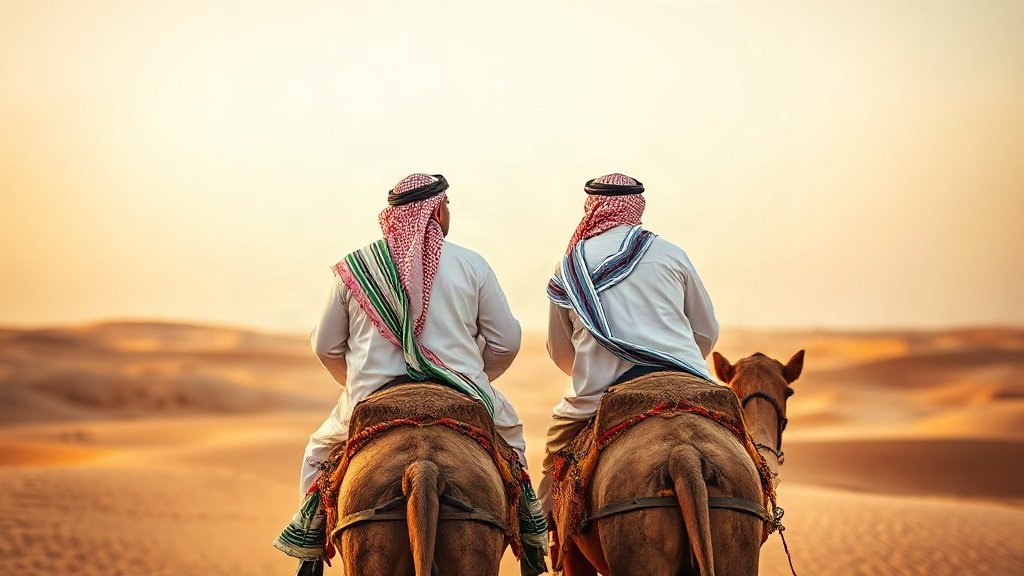
Illustration: AI-generated image
Across the deserts of the Arabian Peninsula, a unique form of sung poetry has travelled with Bedouin caravans for centuries. Known as Al-Taghrooda, this traditional chant is performed by camel riders as they move through the dunes, its steady rhythm matching the gait of their mounts. In 2012, the tradition was inscribed on UNESCO's Representative List of the Intangible Cultural Heritage of Humanity, recognising its deep roots in the United Arab Emirates and Oman.
The word taghrooda comes from the Arabic root meaning "to sing" or "to chant". Historically, it served both practical and social purposes. The call-and-response singing helped coordinate the movement of camels and eased the boredom of long journeys. It also allowed riders to exchange news, praise their animals, or express emotions from love to longing. While the practice is most strongly associated with the UAE and Oman, similar traditions exist in other Gulf states, reflecting a shared Bedouin heritage.
The Call of the Camel Caravan
Al-Taghrooda is typically performed by two groups of riders who alternate verses, creating a musical dialogue across the caravan. The lead group sings a line, and the second group responds with a refrain or a new verse, often echoing the melody with slight variations. This antiphonal structure not only entertained but also kept the riders alert and united over long distances. The rhythm of the chant is closely tied to the camel's stride, with a slow, rolling cadence that can be felt in the rocking motion of the journey.
Traditionally, the chant was performed by men while riding, but women also practice the art in domestic settings, particularly during gatherings and celebrations. In recent decades, Al-Taghrooda has moved from the desert into tents, stages and festivals, where it is performed on foot or seated, preserving its essence while adapting to new contexts.
Poetry in Motion
The verses of Al-Taghrooda are short and rhythmic, often following a simple metre that mirrors the camel's movement. They are either improvised on the spot or drawn from a vast repertoire of traditional Bedouin poetry. The content ranges from descriptions of the desert and its creatures to expressions of love, pride in lineage, and philosophical musings on life and fate. Some verses are humorous, while others carry advice or social commentary.
The language is colloquial and direct, reflecting the oral tradition from which it springs. A skilled performer can compose a verse in response to a challenge, turning the chant into a friendly poetic duel. This improvisational aspect keeps the art form vibrant and allows it to remain relevant to contemporary audiences, even as the camels are replaced by four-wheel drives in daily life.
A Heritage Kept Alive
Today, Al-Taghrooda remains a living tradition in the Gulf, taught within families and communities and showcased at cultural festivals and national events. Heritage centres in the UAE and Oman work to document and transmit the art to younger generations, ensuring that the voices of the desert continue to echo across time. Schools and cultural clubs often organise performances and competitions, encouraging young people to learn the poetic forms and melodies.
For visitors to the region, hearing Al-Taghrooda performed live offers a rare window into the Bedouin way of life that shaped the Gulf long before the rise of modern cities. It is a reminder that the desert is not empty, but filled with the music of memory and belonging.