Al-Khoos: The Art of Weaving Palm Fronds in Gulf Crafts
Discover the traditional skill of al-khoos, the intricate weaving of date palm leaves into everyday objects, from baskets and mats to fans and food covers.
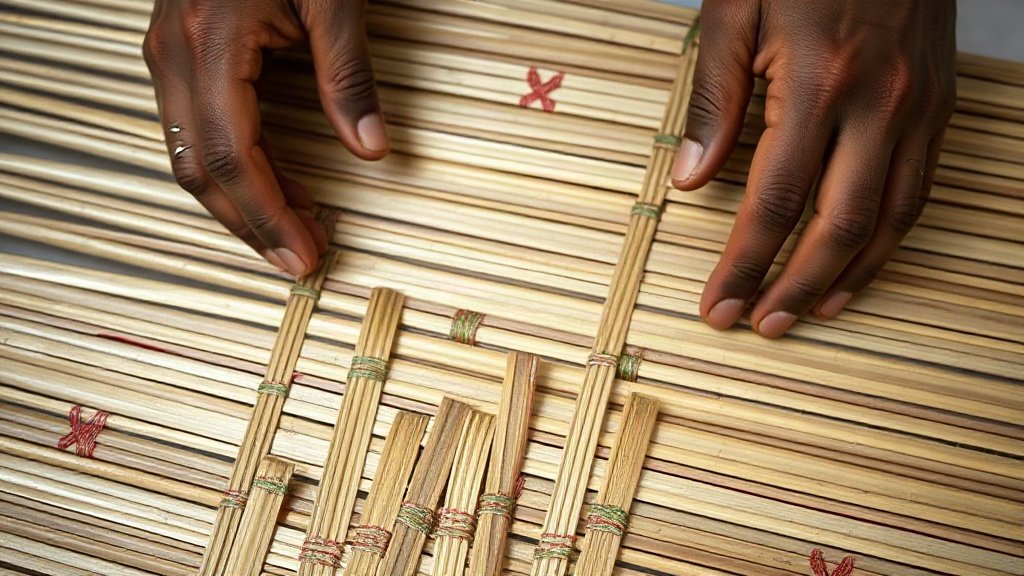
Illustration: AI-generated image
For centuries, the date palm has provided more than just sweet fruit in the Arabian Gulf. Its leaves, stripped and dried, become the raw material for one of the region's most enduring folk crafts: al-khoos, or palm frond weaving. This humble yet intricate art transforms a common plant into objects of daily use and quiet beauty, keeping a link to a simpler past alive in modern homes.
What is al-khoos?
Al-khoos refers to the plaited strips of palm leaves that are woven into a variety of functional items. The craft is practised across the Gulf, from Saudi Arabia and the UAE to Oman, Qatar, Bahrain and Kuwait, and it is often passed down through generations, traditionally by women but also by men. The word itself comes from the Arabic for the fronds or leaves of the palm.
The process begins with harvesting green fronds, which are then split lengthwise into slender strips. These strips are soaked in water to make them pliable, then sometimes dyed with natural colours derived from plants or minerals—reds, greens, yellows and blacks—to create patterns. The weaver then uses a simple over-under technique, often without any loom, shaping the material with skilled hands.
Everyday objects with deep roots
The products of al-khoos are astonishingly varied. Large round mats called haseer or suffrah serve as floor coverings or dining surfaces. Baskets of many sizes—quffah, sallat, tabaq—hold food, clothes or household goods. Hand fans (mahaffah) provide a breeze in hot weather, while conical food covers (tabaq or ghata) protect meals from insects. Even small items like coasters, trays and decorative wall hangings are woven with the same technique.
These objects are not merely decorative. In the pre-oil era, when resources were scarce, al-khoos items were essential to daily life. They were lightweight, durable and made from a renewable local material. Today, they remain in use in many homes, especially during Ramadan for serving dates and water, and they are prized as souvenirs and examples of Gulf heritage.
Techniques and patterns
Weaving styles vary by region and by the object being made. The simplest is a plain checkerboard weave, but more complex patterns include diagonal twills, chevrons and geometric motifs. Some weavers incorporate contrasting dyed strips to create borders or central designs. The edges are finished by folding and securing the strips, sometimes with a decorative braid.
One traditional method involves starting from the centre and working outward in a spiral for round items, while rectangular pieces are built up row by row. The skill lies in keeping the tension even and the shape regular, which takes years of practice to master.
A living heritage
Although mass-produced plastic and metal goods have replaced many traditional items, al-khoos has experienced a revival as part of a broader interest in Gulf heritage. Cultural festivals, craft markets and heritage villages often feature demonstrations by master weavers. Some contemporary designers incorporate palm frond weaving into modern furniture and home décor, blending tradition with innovation.
For many, practising al-khoos is a way to connect with ancestors and the natural environment. The date palm, already revered in Gulf culture, finds another purpose through this craft. As one Emirati weaver told a heritage magazine, "When I weave, I remember my grandmother's hands, and I feel the desert breeze in every strand." That sense of continuity is perhaps the most precious thing al-khoos weaves together.