Wadi Shab, Oman: a practical guide to the Gulf's most famous canyon hike
Turquoise pools, towering cliffs and a waterfall hidden inside a cave. Here is how to plan a rewarding, safe day out at Wadi Shab on Oman's coast.
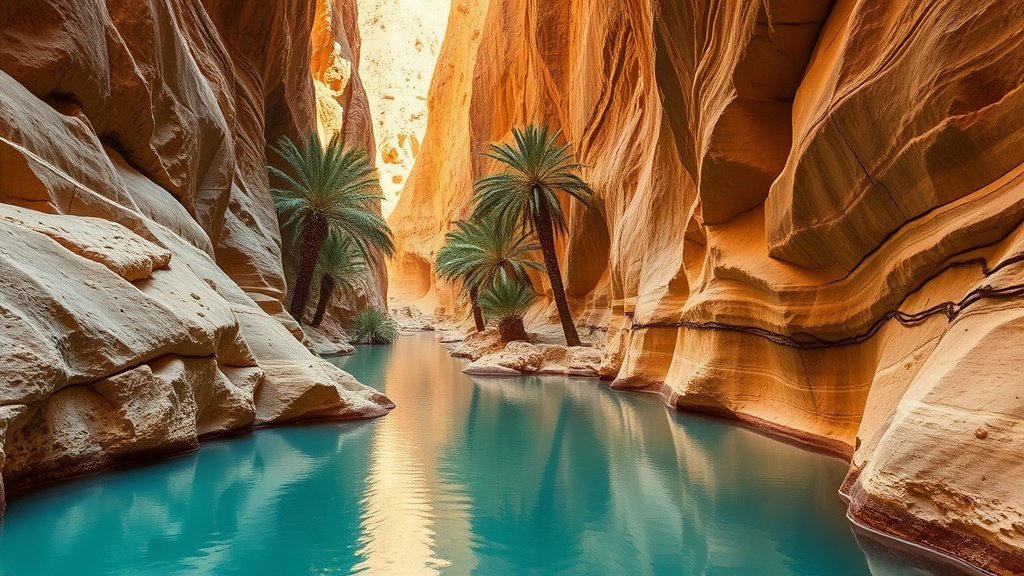
Illustration: AI-generated image
Of all the wadis that cut through Oman's mountains, few have captured travellers' imaginations quite like Wadi Shab. Tucked into the rugged coastline between Muscat and Sur, this narrow canyon rewards a modest hike with emerald pools, date palms clinging to the rocks and, for those willing to swim, a waterfall tucked inside a cave.
It is one of the most popular day trips in the Sultanate, and with good reason. With a little planning, it is also one of the most accessible adventures in the Gulf.
Getting there
Wadi Shab sits close to the village of Tiwi, just off the coastal highway that links Muscat with Sur. Most visitors drive down from the capital, a journey that typically takes around one and a half to two hours depending on traffic and stops. The road itself is part of the pleasure, running past rocky headlands and glimpses of the Gulf of Oman.
A regular saloon car is fine for the journey, as the highway is paved all the way and parking is close to the start of the trail. If you are combining the visit with a night in Sur or a turtle-watching trip further down the coast, Wadi Shab makes a natural stop along the way.
The hike
The adventure begins with a short boat crossing over the water at the mouth of the wadi, as the first section of the canyon is flooded. On the far side, a well-trodden path leads upstream past palm groves and the traditional falaj irrigation channels that have watered Omani farms for centuries.
The walk to the main pools generally takes between 45 minutes and an hour each way at a relaxed pace. The trail involves some scrambling over boulders and a few uneven, slippery stretches, so it suits people with reasonable fitness rather than complete beginners. Children who are confident walkers often manage it well with supervision.
As the canyon narrows, the cliffs grow taller and the water turns an intense shade of turquoise. This is where most people stop to swim.
Swimming to the cave
The highlight for many visitors lies beyond the last pools. Swimmers can follow the water upstream to a narrow gap in the rock, just wide enough to pass through with your head above water. On the other side is a cave where a waterfall tumbles down from above, lit by shafts of daylight.
Only attempt this if you are a confident swimmer. The water is deep in places, and there is nowhere to stand for parts of the route. Go at your own pace and turn back if you feel unsure.
When to go
The cooler months, roughly October to April, are the best time to visit. Summer temperatures in Oman can make the hike genuinely exhausting, though the water offers welcome relief.
Weekdays and early mornings are noticeably quieter than weekends and public holidays. Starting early also means more shade in the canyon and more time to linger at the pools.
Always check the weather before setting out. Like all wadis, Wadi Shab can be affected by sudden flash floods after heavy rain, even rain that falls far away in the mountains. Avoid the canyon if storms are forecast.
What to pack
- Water shoes or sturdy sandals with good grip for wet rocks and swimming.
- Plenty of drinking water and a few snacks.
- A waterproof dry bag for your phone, keys and valuables.
- Sun protection, including a hat and sunscreen.
- A light cover-up to wear over swimwear on the trail.
Visiting respectfully
Wadi Shab is not just a beauty spot. The palm groves and channels along the path belong to local farmers, and the surrounding villages are home to families who have lived here for generations.
Dress modestly while walking, keeping shoulders and knees covered, and save swimwear for the water. Stay on the path rather than walking through cultivated areas, avoid stepping in the falaj channels, and take all your rubbish home with you. Ask before photographing local residents.
Make a day of it
Nearby, the striking Bimmah Sinkhole, a limestone basin filled with blue-green water, is an easy detour and a pleasant spot for another swim. Neighbouring Wadi Tiwi, with its winding road through terraced villages, offers a different perspective on the same dramatic landscape.
Put together, they make for one of the most memorable days out anywhere in the Gulf.