Traditional Gulf Games: A Living Heritage of Strategy and Skill
From board games played with stones to target games with sticks, the Gulf's traditional pastimes offer a fascinating window into the region's social life and creativity.
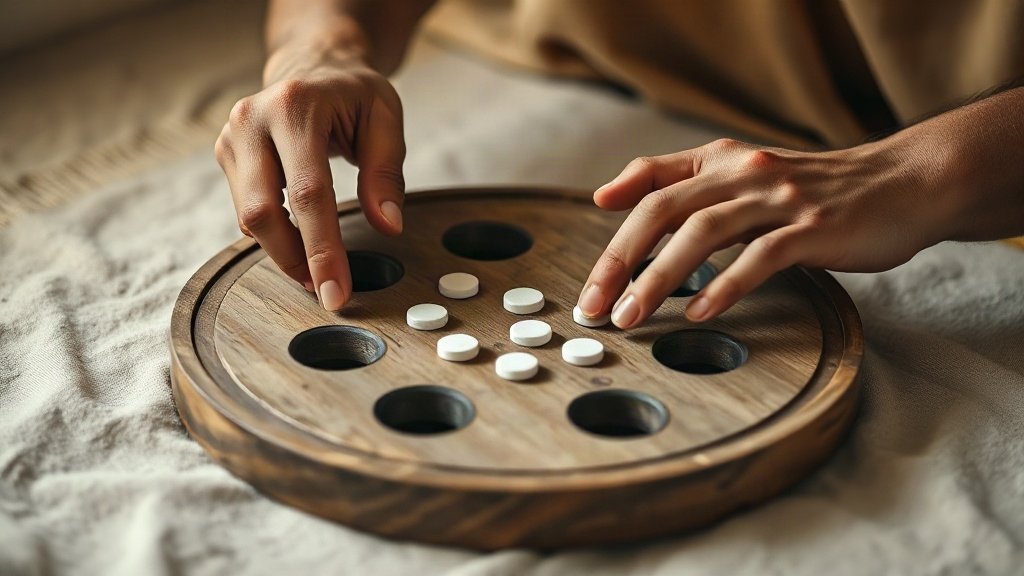
Illustration: AI-generated image
Long before smartphones and video games, the Gulf's evenings and gatherings were filled with the sounds of laughter, friendly competition and the clatter of stones or sticks. Traditional games were more than entertainment; they were a way to sharpen the mind, build social bonds and pass on cultural values from one generation to the next. Today, these games are kept alive at festivals, heritage villages and family get-togethers, offering visitors a chance to step back in time.
A board game of strategy: Al Seedo
Al Seedo is one of the Gulf's most beloved board games, often compared to mancala. Played on a wooden board with rows of pits hollowed out, or sometimes simply dug into the sand, the game uses small stones, seeds or shells as playing pieces. Two players take turns moving their pieces around the board with the goal of capturing the opponent's pieces. The rules can vary slightly from one community to another, but the essence is strategic thinking and careful planning. In the past, men often played Al Seedo in the majlis while sipping coffee, while women and children played their own versions at home. It remains a popular pastime for all ages, and some cultural clubs hold regular tournaments to keep the tradition alive.
A test of aim: Al Dahrei
Al Dahrei is a target game that requires precision and a steady hand. Traditionally, players use a long stick, about one to two metres in length, and take turns throwing it at a small object placed on the ground several metres away. The object could be a stone, a piece of wood or a small metal ring. Points are awarded based on how close the stick lands to the target, or whether it strikes it directly. Historically, this game helped young men develop skills useful for hunting and defence, but over time it became a communal activity at outdoor gatherings, especially during cooler evenings. Today, Al Dahrei is still played in some rural areas and at heritage festivals, where onlookers cheer for the most accurate throws.
Games for children and families
Children had their own repertoire of games that required little more than imagination and found objects. One such game is Al Khatwa, a hopping and balancing game similar to hopscotch, played by drawing a grid in the sand and throwing a flat stone into the numbered squares. Another is Al Tabeh, which involves tossing small stones into the air and catching them on the back of the hand, testing dexterity and concentration. These games were often played in the courtyards of houses or in the open spaces between date palm groves, with boys and girls sometimes playing together before traditional gender roles separated their activities. Many of these games are being revived by schools and community groups as a way to encourage outdoor play and cultural pride.
Why these games matter today
In an age of digital entertainment, the survival of traditional Gulf games is a testament to their enduring appeal. Cultural authorities across the region have recognised their importance, including them in national heritage festivals and documenting their rules in books and films. For families, teaching these games to the next generation is a way to share stories of a simpler time, when entertainment was handmade and social interaction was face-to-face. Visitors to the Gulf can often try these games for themselves at heritage sites, museums and during national celebrations, gaining a hands-on appreciation of the region's creative spirit.