Solar ambulance and battlefield communications unveiled in UAE
Two innovative health technologies presented in Dubai and Abu Dhabi aim to bring medical care to remote and conflict-affected areas.
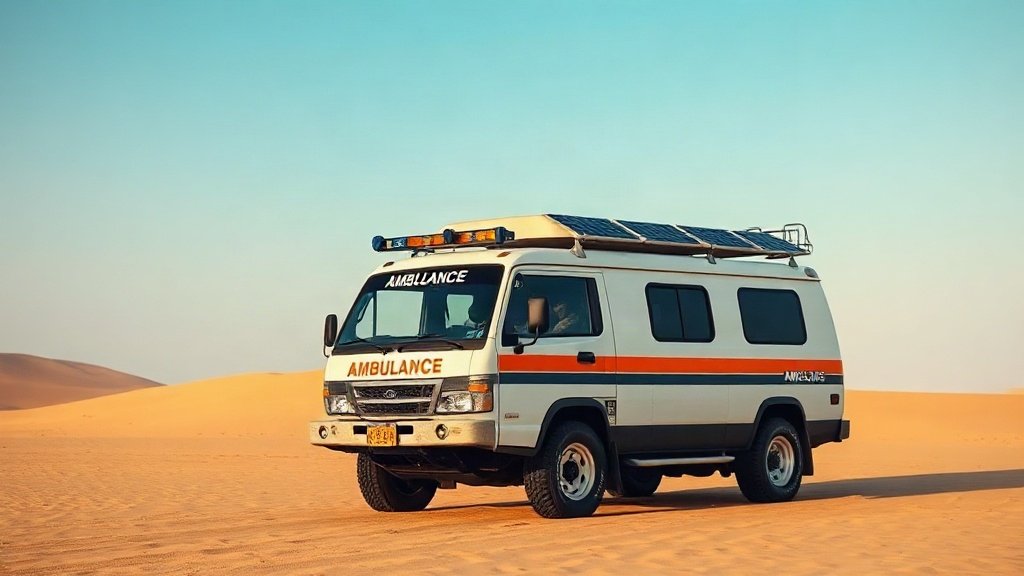
Illustration: AI-generated image
Two healthcare innovations unveiled in the UAE this week aim to bring medical care to some of the world's most remote and dangerous places.
The first, called Stella Juva, is billed as the world's first solar-powered ambulance. Developed by a team of students from Eindhoven University of Technology, the off-road vehicle was displayed at Dubai Future Week. It can travel more than 700 kilometres on a sunny day and is equipped with a portable X-ray, ultrasound scanner and a refrigerated box for medicines and vaccines. "We can basically drive anywhere in the world," structural engineer Thomas Derks told The National. "With this vehicle we don't bring people to the hospital, but we bring health care to the people themselves." The ambulance has been tested in rural Kenya, where it provided care to about 200 people over two days, according to Amref Health Africa.
Meanwhile, at the World Congress of Military Medicine in Abu Dhabi, US company LifeBot unveiled a Medical Command Network that connects medics on the battlefield with specialist doctors hundreds of kilometres away. The system shares patients' vital signs and video feeds in real time, and can switch between Wi-Fi, cellular, satellite and data radio to maintain connectivity. Artificial intelligence analyses medical data and suggests treatments, but a doctor always makes the final decision, said LifeBot president and chief executive Sherif Mohallal. He added that the region is a natural fit for the technology given the need for rapid medical responses.
Both innovations highlight how technology is expanding access to healthcare beyond traditional hospitals, offering hope for communities where medical infrastructure is scarce.