Sadu Weaving: The Bedouin Textile Craft Woven Into Gulf Heritage
Sadu is the geometric, hand-woven textile tradition of Bedouin women across Arabia. Here is how it is made, what the patterns mean and how to appreciate it.
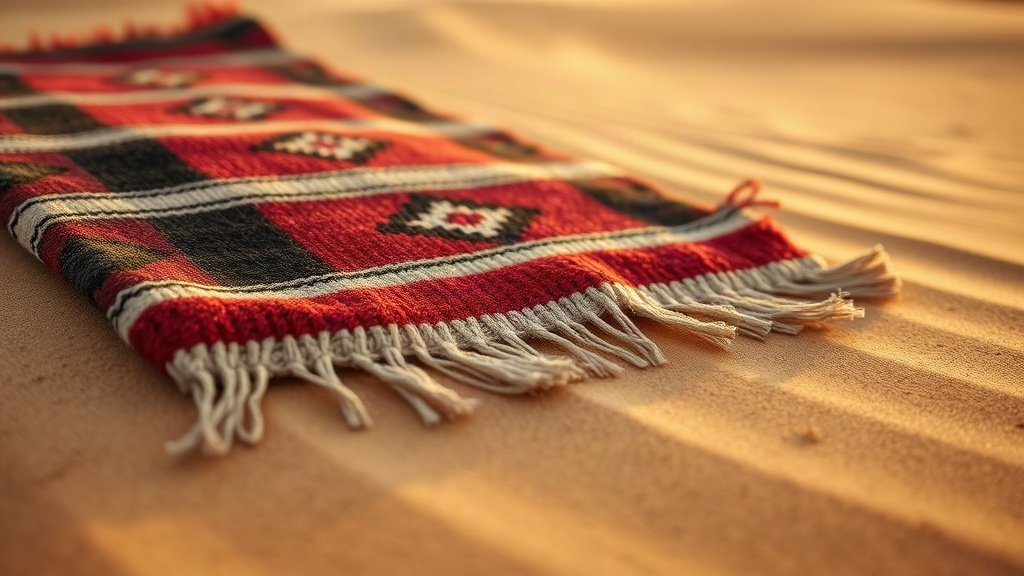
Illustration: AI-generated image
Long before shop-bought rugs and soft furnishings, the tents of Arabia's Bedouin families were furnished by hand. The craft behind much of it is called Sadu, a flat-woven textile tradition practised mainly by women, and it remains one of the most recognisable threads of Gulf heritage.
What is Sadu?
Sadu is a form of weaving done on a low, horizontal ground loom, usually staked out on the sand or laid on the floor. The weaver works the threads by hand, building up dense, sturdy bands of geometric pattern. UNESCO added Al Sadu weaving skills to its list of intangible cultural heritage in need of urgent safeguarding in 2011, with Kuwait and Saudi Arabia among the communities concerned, and later recognised a wider shared tradition across the region.
Materials and colours
Traditionally, the yarn came from the animals the family kept: sheep wool, goat hair and camel hair. The wool was cleaned, spun by hand and dyed using natural sources, giving a palette of deep reds, black, white, brown and cream. Today some weavers use commercial yarn, which widens the range of colours while keeping the technique the same.
What was it used for?
Sadu was practical first and decorative second. Woven strips were stitched together to make the dividing walls and roofs of tents, as well as floor coverings, cushions, saddle bags and decorative trappings for camels and horses. The tight weave offered protection from wind and dust, and the tents could be adjusted with the seasons.
Reading the patterns
The designs are built from repeated lines, triangles, diamonds and stripes. Many are said to draw on desert life, including the landscape, the stars and everyday objects, though interpretations vary between families and regions. Rather than looking for a single fixed meaning, it is better to think of the motifs as a shared visual language that each weaver handles in her own way.
How to appreciate Sadu today
- Visit a heritage centre or museum. Many Gulf countries have cultural houses and museums where weavers demonstrate the loom and explain the process.
- Look closely at the back and the edges. Good Sadu is even in tension, with crisp pattern edges and no loose, uneven sections.
- Ask about the yarn. Hand-spun natural fibres feel different from machine-made yarn, and a knowledgeable seller or guide will happily explain which is which.
- Buy with care. If you want a keepsake, look for pieces sold by cooperatives or craft programmes that support the weavers directly.
A living craft
As Bedouin life became more settled, demand for tent textiles fell, and the skill risked fading. Designers and craft initiatives have since adapted the patterns for cushions, bags, accessories and interiors, introducing Sadu to a new generation. That mix of old technique and modern use is a large part of why it still feels relevant.
For visitors and residents alike, Sadu is a simple way into a bigger story: how people in a demanding landscape turned the materials around them into something durable and beautiful.