Egyptian artist uses bread to explore identity and language in Dubai
Andrew Riad’s Ahlan Club gatherings and his recent Eish (Life) performance use food to spark conversations about heritage, language and belonging.
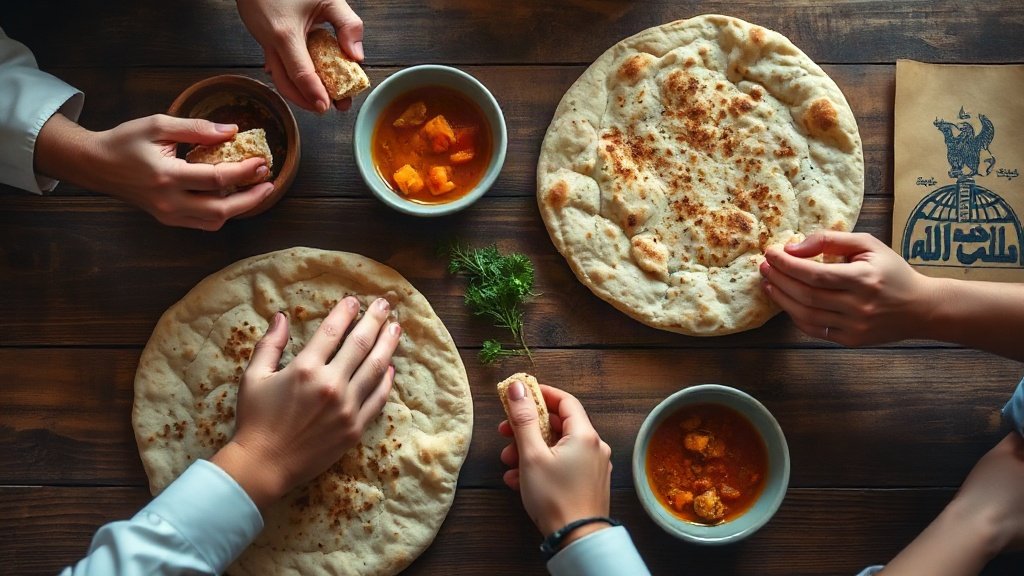
Illustration: AI-generated image
Egyptian artist Andrew Riad is bringing people together over shared meals and stories through Ahlan Club, a community he founded that blends food, poetry and conversation.
The 26-year-old, who is of Coptic Nubian heritage, sees food as more than nourishment. For Riad, it is a way to explore questions of identity, heritage and language, often drawing on recipes from his mother.
His latest project focuses on eish baladi, Egypt’s traditional flatbread. In Arabic, the word eish means bread, but it also carries the meaning of life. “Bread is beyond being nutritious or a food item; it’s deeply a political and sociocultural object,” Riad told The National.
That connection is personal for Riad, who left Egypt just before the 2011 revolution. He remembers protesters in Cairo’s Tahrir Square chanting “Eish, horeya, adala egtmaya” – bread, freedom and social justice. Bread also played a central role in Egypt’s 1977 Bread Intifada, when cuts to food subsidies sparked widespread unrest.
These layered histories inspired Eish (Life), a performance Riad presented in Dubai earlier this month. It was supported by the Alserkal Arts Foundation’s Kitchen As Studio residency programme, which looks for artists who “problematise” and “peel away the layers” of food, according to acting arts director Kevin Jones.
Riad, who studied literature and creative writing at NYU Abu Dhabi and later earned an MFA from Pratt Institute, takes language seriously. He points to the three-letter Arabic root of eish, which conveys ideas of livelihood, presence and a person’s biography.
That welcoming spirit is central to Ahlan Club, whose name derives from ahlan wa sahlan, meaning welcome. Strangers gather shoulder to shoulder, sharing from communal platters and building a growing community. “It is something very simple, yet the simplest things are always the hardest to replicate,” said frequent attendee Ania Poteryaeva.