Balaleet: A Guide to the Gulf's Sweet Vermicelli Breakfast
Balaleet is a beloved Gulf breakfast of sweetened vermicelli topped with a savoury omelette, blending cardamom, saffron and rose water in one comforting dish.
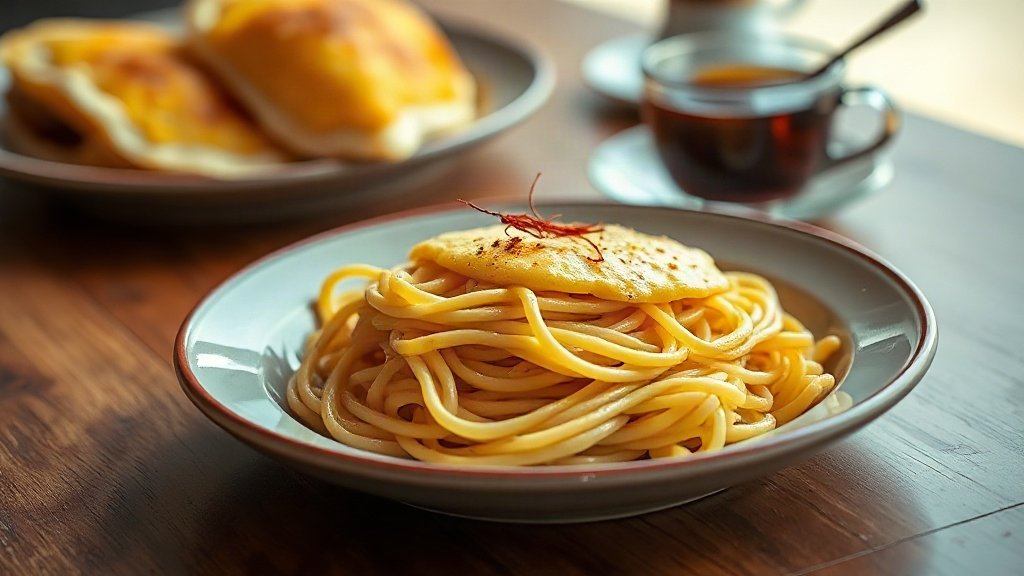
Illustration: AI-generated image
Balaleet is a signature breakfast dish across the Gulf, where thin vermicelli noodles are cooked with sugar, cardamom and saffron, then topped with a thin, savoury omelette. The contrast of sweet noodles and lightly salted egg is central to its appeal, and the dish appears on family tables, at festive gatherings and in cafés from Kuwait to Oman.
What is Balaleet?
Balaleet is made from very fine wheat vermicelli, similar to angel hair pasta but thinner. The noodles are first toasted in ghee or butter until golden, then simmered with water, sugar and a mix of aromatic spices. The result is a glossy, sweet noodle base that is always served with an omelette on top. Some cooks flavour the eggs with a pinch of black pepper or turmeric, but the omelette is deliberately kept simple so that its savoury, firm texture balances the sweetness below.
How Balaleet is Made
The process begins by browning the vermicelli in hot ghee or unsalted butter, which gives the dish a nutty depth. Once the noodles are evenly golden, water is added along with sugar, ground cardamom and a few strands of saffron. The mixture is simmered until the liquid is absorbed and the noodles become tender but not mushy. Rose water or orange blossom water is often stirred in at the end for a floral note. Meanwhile, eggs are beaten with a little salt and sometimes a splash of milk, then cooked in a wide pan into a thin, even omelette. The omelette is cut into strips or placed whole over the sweet vermicelli, and the dish is served warm.
Serving and Customs
Balaleet is primarily a breakfast or brunch dish, but it also appears at Eid celebrations and during Ramadan as a suhoor option. It is commonly accompanied by Arabic coffee or sweetened tea with mint. When served to guests, the vermicelli is often decorated with a few saffron threads or a light dusting of ground cardamom. In some households, a small bowl of plain yoghurt is offered on the side to cut the sweetness. Eating with the right hand is customary, and the omelette is usually broken into small pieces and mixed with the noodles before the first bite.
Making Balaleet at Home
Balaleet is easy to prepare with supermarket ingredients, although some cooks prefer to buy pre-toasted vermicelli sold in Middle Eastern grocery shops. The key steps are to toast the noodles well, use a generous amount of cardamom, and avoid overcooking the vermicelli so that it keeps a slight bite. For the omelette, a wide non-stick pan helps produce a thin, crepe-like layer. The dish can be made ahead and reheated gently, but the omelette is best cooked just before serving. Leftovers keep well in the fridge and are sometimes enjoyed cold with a cup of tea.
Balaleet Across the Gulf
While the basic sweet-and-savoury combination is consistent, small variations exist. In Bahrain and Qatar, rose water is often more pronounced, while in the UAE and Oman, saffron is used more generously. Some families add a handful of raisins or a few crushed pistachios on top, though the classic version remains unadorned. Balaleet is also a common dish in Iranian-influenced kitchens along the Gulf coast, where it may be served with a side of salty white cheese. Regardless of the variation, the dish remains a comforting and nostalgic breakfast that connects generations to the region's culinary heritage.