Al-Razfa: The Gulf's Traditional Stick Dance of Rhythm and Poetry
Discover Al-Razfa, the traditional stick dance of the UAE and Oman, performed with drums and chanted poetry at weddings and celebrations.
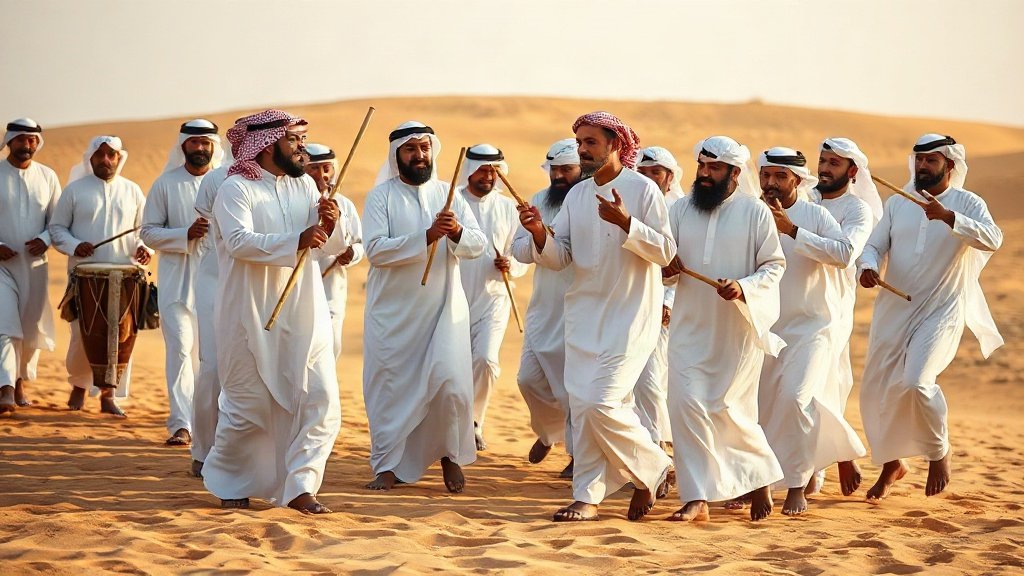
Illustration: AI-generated image
Al-Razfa is a traditional performing art from the United Arab Emirates and Oman, blending rhythmic movement, poetry and percussion. Performed by men at weddings, national celebrations and cultural festivals, it is a powerful expression of Bedouin heritage and communal pride.
Origins and Meaning
The dance has deep roots in the desert traditions of the Arabian Peninsula. Historically, it was performed by Bedouin tribesmen to celebrate victories, welcome guests and mark important occasions. The name "Razfa" is thought to derive from the Arabic word for the sound of feet stamping in unison, reflecting the dance's strong rhythmic foundation. In 2015, UNESCO inscribed Al-Razfa on its Representative List of the Intangible Cultural Heritage of Humanity, recognising its importance to the identity of communities in the UAE and Oman.
How It Is Performed
Performers form two facing rows, each man holding a thin stick known as a shabana or asa. They move together in a hypnotic, side-to-side stepping motion, sometimes crouching low and rising in time with the beat. The rows often advance and retreat, creating a dynamic interplay. In some variations, swords are used instead of sticks, adding a martial element to the display. Dancers typically wear traditional attire: a white thobe, a ghutra headdress secured with an agal, and sometimes a bisht cloak for formal events. The simple, elegant clothing allows freedom of movement and emphasises the unity of the group.
Instruments and Poetry
The performance is driven by drums, typically the doumbek or larger tabl, which maintain a steady, driving rhythm. A lead singer, or shair, chants traditional Nabati poetry, often extolling bravery, generosity or love, while the dancers respond with repeated refrains. The call-and-response structure creates a dialogue between the poet and the performers, making each rendition unique. The poetry is passed down orally, linking generations through shared verses.
Where to See It Today
Al-Razfa remains a living tradition. It is regularly performed at Emirati and Omani national day events, heritage festivals and weddings. Visitors to the region can often witness the dance at cultural villages and museums, where it serves as a vibrant welcome and a reminder of the Gulf's enduring Bedouin spirit.