A Guide to Arabic Coffee (Gahwa): The Gulf's Symbol of Hospitality
More than a drink, Arabic coffee is a ritual of welcome across the Gulf. Learn how it is brewed, served and enjoyed.
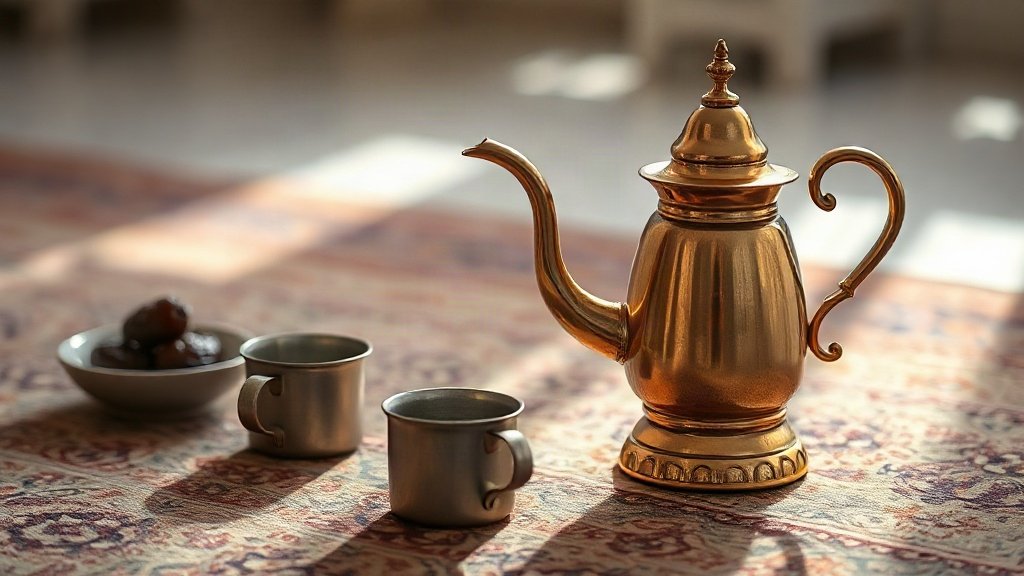
Illustration: AI-generated image
Across the Gulf, the scent of lightly roasted coffee beans mingled with cardamom and saffron is the unmistakable signal of welcome. Arabic coffee, known as gahwa, is far more than a morning pick-me-up: it is a symbol of generosity, a cornerstone of social gatherings, and a tradition passed down through generations. Unlike the strong, dark brews popular in the West, gahwa is pale, fragrant and served in small, handleless cups, always accompanied by dates or sweets.
Brewing the Perfect Pot
Traditional gahwa begins with lightly roasted coffee beans, which give the drink its golden colour and gentle flavour. The beans are ground to a fine powder, often with a heavy brass or wooden grinder. The ground coffee is then added to water in a dallah, the iconic long-spouted pot, and brought to a simmer. Cardamom pods, cracked open to release their aroma, are added along with optional spices such as saffron, cloves or a hint of rose water. The coffee is brewed for ten to fifteen minutes, never boiled, then left to settle so the grounds sink to the bottom. Some families add ground cardamom directly to the pot; others keep a separate spice blend to stir into each cup.
Serving Traditions
Gahwa is poured from the dallah into small, ornate cups called finjan. The cups are filled only a third or a quarter full – roughly a sip or two – so the coffee remains warm and guests can be offered refills without waste. The host or a designated server, usually the youngest member of the household, holds the dallah in the left hand and the cups in the right, moving clockwise around the room. Guests are served in order of age or status, with the most honoured guest first. A small plate of dates, luqaimat or other sweets is always presented alongside, as the sweetness balances the coffee's gentle bitterness.
Etiquette at the Table
Accepting a cup of gahwa is a gesture of friendship, and refusing can cause offence. When you have had enough, the polite signal is to tilt the empty cup from side to side before handing it back, or simply place your hand over the cup and say bas (enough). The server will continue to pour until you give this sign, as endless refills are a mark of hospitality. It is customary to drink the coffee in one or two sips, never to blow on it or add sugar – the cardamom and saffron provide the flavour. After drinking, many guests gently shake the cup to show they are finished.
A Ritual for Every Occasion
From weddings and Eid gatherings to business meetings and casual visits, gahwa is woven into the fabric of Gulf life. Bedouin tradition holds that a guest should be offered coffee before any discussion begins, and the ritual of serving remains a point of pride for families across the region. Whether you are a visitor or a long-time resident, learning to appreciate – and properly accept – this fragrant brew opens a door to the warmest traditions of the Gulf.