A'ali Pottery: A Practical Guide to Bahrain's Traditional Craft Village
Discover the ancient craft of pottery in the village of A'ali, where families have shaped clay for generations. This guide covers what to see, how the pots are made, and how to visit respectfully.
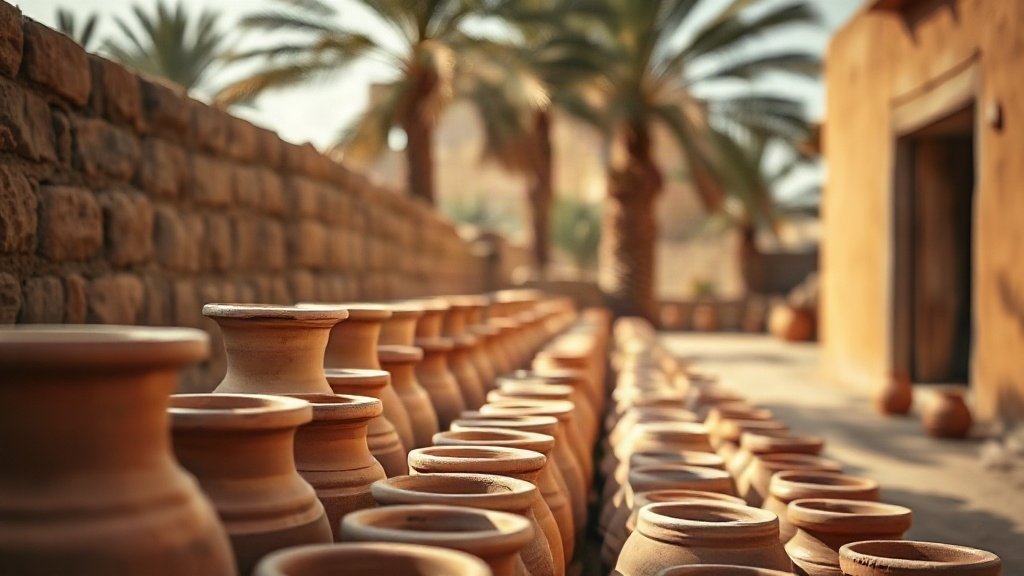
Illustration: AI-generated image
The village of A'ali in Bahrain is one of the Gulf's most distinctive cultural destinations. Known for its traditional pottery, the settlement sits on a low hill surrounded by palm groves and ancient burial mounds. For visitors, A'ali offers a rare chance to watch craftspeople at work and to buy pieces made using methods passed down for centuries. This guide explains what makes A'ali special, how the pottery is made, and how to plan a respectful visit.
Why A'ali is known for pottery
Pottery has been made in A'ali for at least 4,000 years. The area's natural clay, combined with the availability of water and fuel from palm trees, made it an ideal centre for the craft. Today, several family-run workshops continue the tradition. While the number of active potters has declined over the years, the village remains the heart of Bahrain's ceramic production. The objects made here – from large water storage jars to small decorative pieces – are sold across the Gulf and are prized for their earthy, unglazed finish.
The craft in practice
Traditional A'ali pottery is made using a simple kick wheel or by hand. The clay is local, dug from nearby pits, and is mixed with water and sometimes sand to achieve the right consistency. Potters shape the clay into forms such as hib (large water jars), bowls, incense burners, and plant pots. After shaping, the pieces are left to dry in the open air before being fired in kilns. The kilns at A'ali are particularly distinctive: tall, chimney-like structures built from mud and stone, often set into the ground. Firing usually uses palm fronds and other dry vegetation, and the resulting pots range in colour from pale buff to a rich terracotta, depending on the clay and firing conditions.
Visitors to the workshops can often watch potters at the wheel. The work is skilled and fast – a simple pot can be thrown in a matter of minutes. Many workshops welcome visitors to observe, and some allow a quick try at the wheel with guidance. It is always polite to ask before taking photographs, and a small purchase is appreciated as a way of supporting the craft.
The ancient burial mounds
Beyond pottery, A'ali is surrounded by one of the largest prehistoric cemetery complexes in the world. The Dilmun-era burial mounds date back around 4,000 years and are part of a UNESCO World Heritage Site. The most impressive mounds are located on the outskirts of the village, some reaching several metres in height. While many mounds have been excavated, others remain intact. Visitors can view the mounds from the roadside or from designated viewpoints; entering or climbing is not permitted. The combination of living craft and ancient landscape makes A'ali a compelling stop for anyone interested in the deep history of the Gulf.
Practical tips for visiting
A'ali is located in the northern part of Bahrain, roughly a 20-minute drive from the capital, Manama. It is easy to reach by car or taxi, and parking is generally available near the pottery area. There is no formal entrance fee, as the workshops are working businesses. The best time to visit is in the morning, when potters are most active and the light is good for photography. Modest dress is recommended, consistent with local customs; shoulders and knees should be covered. Shoes that can handle dusty ground are advisable.
When buying pottery, consider the weight and fragility if you are travelling on. Many pieces are bulky, and while some workshops can wrap items carefully, it is wise to bring your own padding or plan to ship larger purchases. Small items such as incense burners or miniature pots make excellent souvenirs and are easy to pack. Haggling is not common in the workshops, and prices are usually fair for the work involved. Cash is preferred.
A'ali is more than a shopping stop. It is a place to slow down, observe a time-honoured skill, and appreciate a craft that has endured for millennia. A visit pairs well with a trip to the Bahrain National Museum in Manama, which houses examples of ancient pottery and information on the Dilmun civilisation. Together, they offer a fuller picture of the island's rich material culture.