The Oud: A Guide to the Gulf's Beloved String Instrument
Discover the history, craftsmanship, and cultural role of the oud, the pear-shaped string instrument at the heart of Gulf music.
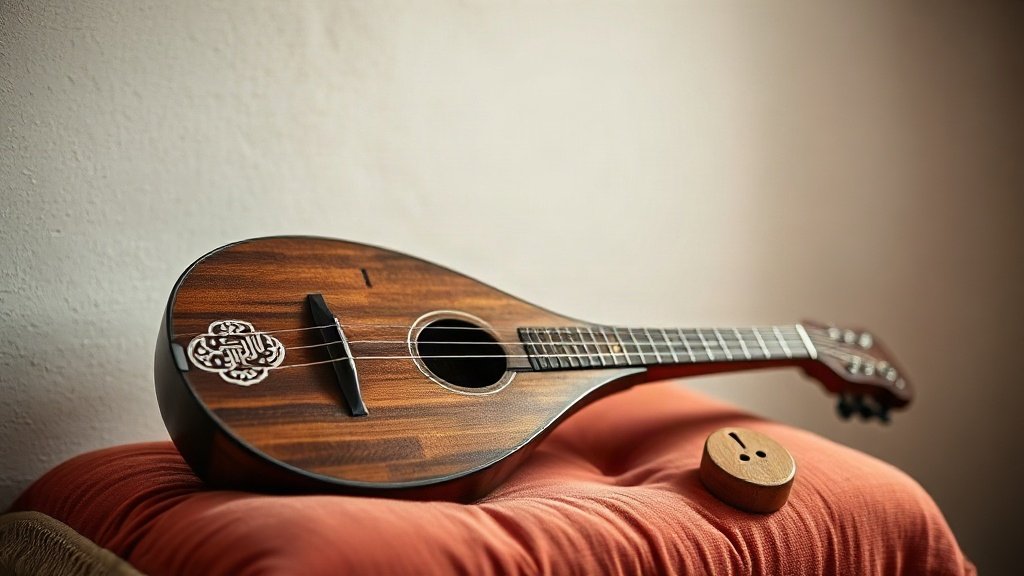
Illustration: AI-generated image
The oud holds a special place in the musical heritage of the Gulf and the wider Arab world. With its deep, resonant tone and pear-shaped body, it has been a companion to singers and poets for centuries. This guide explores the instrument's origins, construction, playing style, and enduring significance in Gulf culture.
Origins and History
The oud's roots stretch back thousands of years, with ancestors appearing in ancient Mesopotamia and Egypt. Its name derives from the Arabic word for wood, reflecting the material from which it is traditionally made. From the Arabian Peninsula, the instrument travelled along trade routes to Europe, where it evolved into the lute. In the Gulf, the oud has been a central feature of both classical Arabic music and folk traditions, often accompanying vocal performances at majlis gatherings and cultural events.
Anatomy of the Oud
The oud is easily recognised by its distinctive shape: a large, rounded back made of multiple wooden ribs, a flat soundboard with one to three sound holes, and a short, fretless neck. Most Gulf ouds have 11 strings grouped in courses, typically five pairs and a single bass string, though variations exist. The strings are plucked with a plectrum called a risha, traditionally made from an eagle feather but now often crafted from plastic. The absence of frets allows for the microtonal nuances essential to Arabic maqamat, the melodic modes that define regional music. Common woods include spruce for the soundboard and walnut, maple, or rosewood for the bowl.
Playing the Oud
The oud is held across the chest, with the player seated, and the plectrum is used to strike the strings in a downward or upward motion. Techniques include tremolo picking for sustained notes and intricate ornamentation such as slides and trills. Learning the oud requires an understanding of maqamat, as each mode has its own emotional character and set of intervals. In the Gulf, the oud often accompanies traditional songs and dances, providing both rhythmic drive and melodic improvisation called taqsim.
The Oud in Gulf Culture
Beyond its role in performance, the oud embodies craftsmanship and heritage. Skilled luthiers hand-carve each instrument, sometimes spending months on a single piece. The oud's presence extends to modern Gulf pop and fusion genres, where musicians blend traditional maqamat with contemporary styles. Whether heard in a traditional ensemble or a modern concert, the oud remains a symbol of Gulf identity and artistic expression.