The Carved Doors of the Gulf: A Window into Architectural Heritage
Gulf cities are known for gleaming towers, but their historic districts hold quieter treasures: intricately carved wooden doors that once guarded homes and told stories of wealth, taste and welcome.
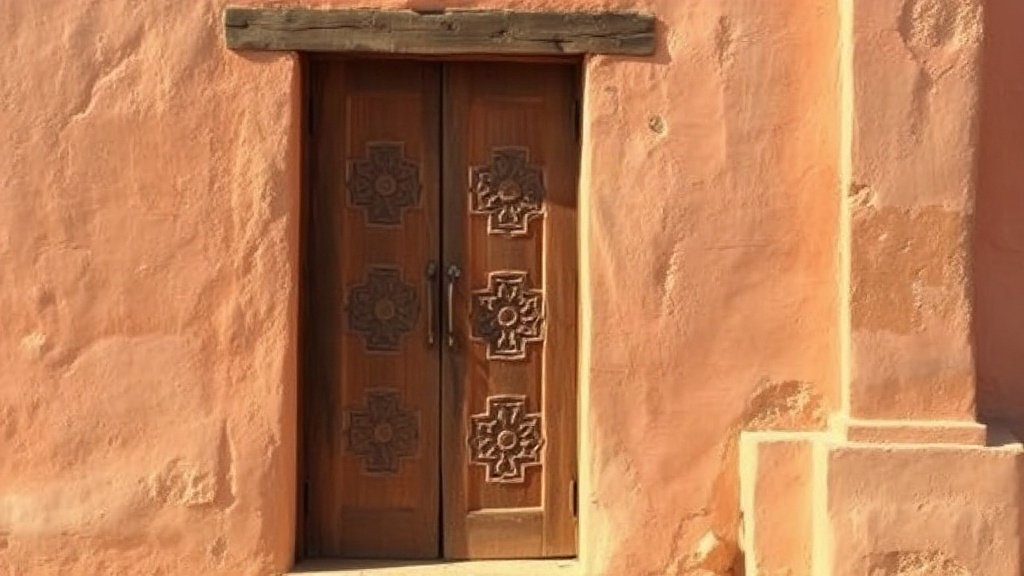
Illustration: AI-generated image
Walk through the narrow lanes of Al Fahidi in Dubai, Al Balad in Jeddah or the Souq Waqif area of Doha and your eye is drawn not upward but to the thresholds around you. Heavy wooden doors, often studded with metal and carved with geometric or floral patterns, mark the entrances to courtyard homes that have stood for a century or more. These doors are not simply functional; they are a distinctive art form that speaks of the Gulf's pre-oil era, when craftsmanship, privacy and hospitality shaped every part of domestic life.
A tradition shaped by climate and culture
The Gulf's extreme heat and close-knit family structures influenced the design of traditional homes, and the door was a crucial element. Thick teak or sidr wood, imported from India or East Africa, insulated against the sun and provided security. The door often opened not directly into living spaces but into a bent entrance or a small vestibule, protecting the privacy of the household from passers-by. Carved panels allowed some air to circulate while still screening the interior. The size and decoration of a door could indicate the family's status, but all doors shared a purpose: to welcome guests while safeguarding the domestic realm.
Motifs and meanings
Common motifs include palm trees, rosettes, interlaced stars and geometric grids. These patterns are not merely decorative; many echo Islamic artistic traditions that favour symmetry and infinite repetition, reflecting divine order. In some coastal towns, doors feature carved waves or dhow sails, linking the home to the sea. Iron studs, originally used to strengthen the wooden planks, became decorative elements arranged in rhythmic patterns. Brass or iron knockers, often shaped like hands or rings, added a musical note to the visitor's approach.
Regional variations
While the overall tradition is shared, subtle differences emerge. In the UAE and Oman, doors often have a central vertical post and smaller carved panels above and below the lock. In Bahrain and Kuwait, some doors are painted in deep blues or greens, a practice thought to ward off evil or simply to add colour to the streetscape. Saudi Arabia's Red Sea coast shows influences from Ottoman and Indian styles, with more elaborate cusped arches and inlaid mother-of-pearl. Despite these variations, the underlying language of geometric carving and robust construction is consistent across the peninsula.
Preservation and contemporary echoes
Today, many of these doors survive only in restored heritage districts, where they have become backdrops for photographs and quiet reminders of a slower era. Some contemporary architects in the Gulf have drawn inspiration from the old door's proportions and motifs, creating modern interpretations in metal and glass. Conservation efforts often involve master carpenters who still practise the traditional joinery techniques, ensuring that the skill does not vanish. For visitors, simply walking the old quarters and pausing before these doorways offers a glimpse into a world of shaded courtyards, family gatherings and unhurried hospitality.