Salalah's Khareef: A Practical Guide to Oman's Monsoon Season
Each summer, the southern Omani region of Dhofar transforms into a green, misty landscape. Here's how to experience the khareef, from waterfalls to frankincense trees.
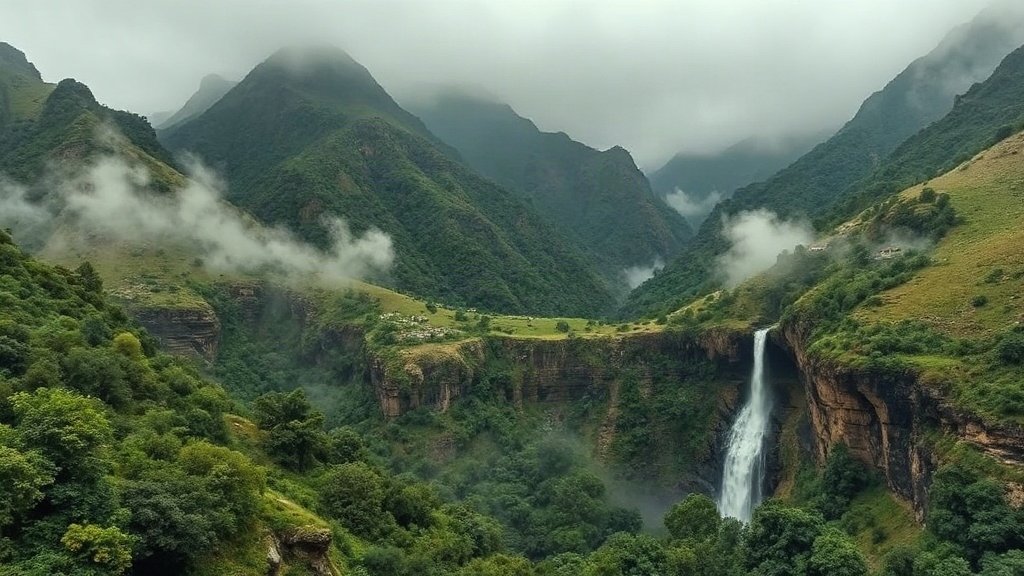
Illustration: AI-generated image
From June to September, a remarkable transformation takes place in the southern Omani governorate of Dhofar. While much of the Arabian Peninsula endures intense summer heat, the coastal city of Salalah and its surrounding mountains are cooled by the khareef – the south-west monsoon that brings persistent drizzle, mist and bursts of heavy rain. The result is a landscape of cascading waterfalls, emerald valleys and frankincense trees shrouded in cloud, drawing visitors from across the Gulf and beyond.
What is the Khareef?
Khareef is the Arabic word for autumn, but in Dhofar it refers specifically to the monsoon season. Moist air from the Indian Ocean is pushed inland by seasonal winds and cools as it rises over the Qara Mountains, producing a fine, drifting mist known locally as behoor. The rain is rarely torrential; instead, it is a gentle, persistent spray that can last for days. Temperatures during this period typically range between 20°C and 27°C, a striking contrast to the 45°C or more felt in Muscat or Dubai. This natural phenomenon is the reason Dhofar has been famous for frankincense for millennia – the trees thrive in the humid conditions.
Where to Experience the Khareef
The best way to appreciate the khareef is to head into the mountains or along the coast where the moisture is most concentrated. Wadi Darbat, about 40km east of Salalah, is a highlight: a valley that fills with waterfalls and temporary lakes during the season, surrounded by lush green vegetation. Visitors can walk along the wadi bed, watch water tumble over the limestone cliffs, or simply enjoy a picnic in the cool air. Further east, the Ayn Razat and Ayn Athum springs flow more strongly than at any other time, and their surrounding gardens are especially vibrant.
Along the coast, the Mughsail blowholes are at their most dramatic during the khareef, when the high waves force spray through natural openings in the rock with a thunderous sound. The nearby Marneef Cave offers a sheltered viewpoint. For a more cultural angle, the ancient frankincense groves of Wadi Dawkah – a UNESCO World Heritage Site – are at their greenest, though the trees themselves are low and scrub-like rather than towering.
Planning Your Trip
The khareef season generally runs from late June to early September, with peak rainfall in July and August. Roads can become slick and visibility may be reduced by fog, so drive slowly and use headlights. Bring a light waterproof jacket or umbrella – the drizzle is constant but often light enough to walk through comfortably. A warm layer is useful for evenings, as temperatures can drop to the high teens.
Accommodation in Salalah is busiest during this period, particularly around the annual Khareef Festival, which celebrates the season with cultural events, food stalls and performances. Book well in advance. When exploring the mountains, carry water and snacks, as facilities are limited outside the town centres. Respect local customs by dressing modestly, even while hiking – long sleeves and trousers are practical for both the climate and cultural norms.
Why It's Special for Gulf Travellers
For residents of the GCC, the khareef offers a rare chance to escape the summer heat without leaving the region. The flight from Muscat or Dubai is short, and the change of scenery is dramatic: brown hills become green, dry wadis run with water, and the air smells of wet earth and frankincense. It is a reminder that the Arabian Peninsula is not only desert – in Dhofar, the monsoon creates a landscape that feels closer to the Indian subcontinent or East Africa than to the familiar Gulf.
Whether you come for the waterfalls, the cooler air or simply to witness the seasonal greening of the frankincense trees, the khareef is one of the Gulf's most remarkable natural events. Plan ahead, drive carefully, and allow time to simply sit and watch the mist roll over the mountains.