Sadu Weaving: A Practical Guide to the Gulf’s Traditional Bedouin Craft
Discover sadu, the geometric textile art of the Arabian Peninsula’s Bedouin women, and learn where to see authentic examples and experience the craft firsthand.
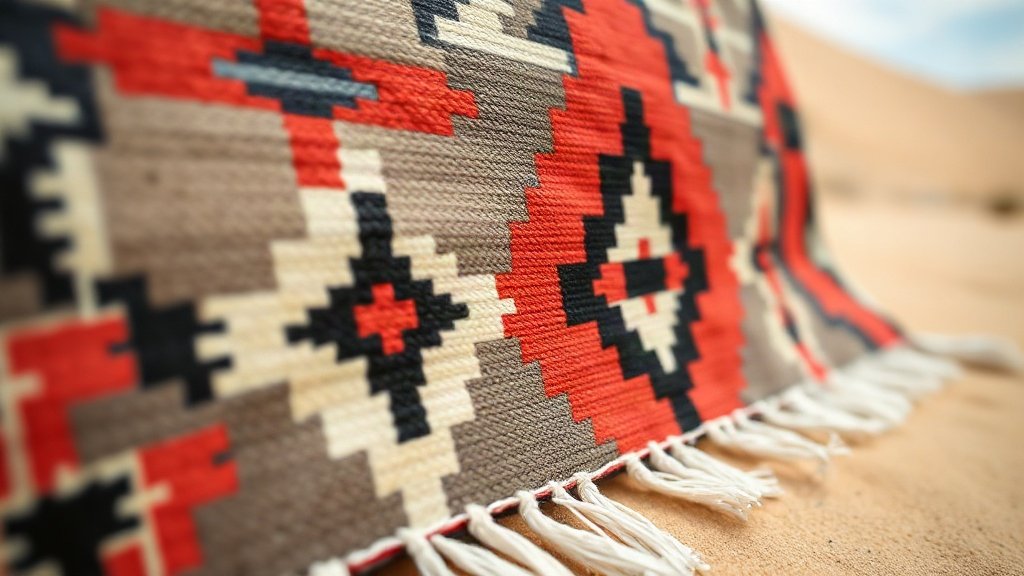
Illustration: AI-generated image
Long before looms were mechanised, Bedouin women across the Arabian Peninsula wove their stories into strips of wool and goat hair. The result was sadu — a distinctive textile art characterised by bold geometric patterns and earthy colours that once served as tents, rugs, cushions and camel trappings. Today, sadu is recognised by UNESCO as an Intangible Cultural Heritage, and it remains one of the Gulf’s most tangible links to its nomadic past.
What is sadu?
Sadu is a traditional form of weaving practised by Bedouin communities, particularly in Kuwait, Saudi Arabia, Qatar, the UAE and parts of Oman. The cloth is woven on a ground loom using wool from sheep, camels or goats, and the finished pieces are often decorated with geometric motifs in red, black, white, indigo and green. Historically, women created the textiles for their own households — a tent divider, a floor rug, a saddlebag — and the craft was passed down from mother to daughter.
The designs are not random. Recurring shapes include the triangle, diamond and zigzag, which can symbolise everything from desert landscapes and animal tracks to protection and good fortune. Each region developed its own variations, so a piece from Kuwait often looks distinct from one woven in the Empty Quarter. The patterns are a quiet language, carrying the identity of the weaver and her community.
Where to see sadu today
Although the nomadic way of life has largely disappeared, sadu has found new life in museums, heritage festivals and craft cooperatives across the Gulf. In Kuwait, the craft is actively promoted through dedicated centres where visitors can watch demonstrations and buy contemporary pieces. Similar initiatives exist in Abu Dhabi, Doha and Riyadh, often attached to larger cultural venues. Seasonal events such as national day celebrations and traditional markets frequently include sadu displays and live weaving.
When you visit, take time to compare the textiles. Look at the back of a piece — handwoven sadu often shows slight irregularities and the reverse may have loose threads where the pattern changed colour. This evidence of hand work is part of the charm, and a good way to distinguish authentic pieces from machine-made imitations.
How to appreciate the patterns
Start by identifying the base colour. Traditional sadu is usually woven on a ground of black or deep brown, with the design worked in natural undyed white, red from madder root, indigo for blue, and sometimes green from plant dyes. The motifs are built up row by row, so patterns tend to be linear and repetitive. Common forms include the shajarah (tree of life), alwiya (a hook-like motif representing the protective amulet), and the wasm — a tribal brand mark used to identify livestock and, by extension, the weaving family.
A particularly fine piece will have crisp edges between colours and a balanced rhythm of shapes. If you are lucky enough to meet an artisan, ask about the meaning of the patterns. Many weavers are happy to explain the symbolism, and their stories add a layer of meaning no photograph can capture.
Buying authentic sadu
For travellers who wish to take home a piece of this heritage, the best sources are cooperative shops and craft markets linked to heritage organisations. These often sell items made by local women’s groups, ensuring that your money goes directly to the artisans. Expect to pay more than you would for a synthetic wall hanging — natural fibres and hand work have a cost — but the pieces are durable and often become family heirlooms.
Avoid items that look too perfect or uniform, especially if the label says “handmade” but the back is perfectly flat. Genuine sadu will have a tactile, slightly nubby texture, and the fringe at the ends is usually twisted by hand. If you are unsure, ask the seller where and how the piece was made; reputable vendors are usually proud to share the story.
Hands-on experiences
Several cultural centres across the Gulf now offer short workshops where visitors can try their hand at the ground loom. These sessions typically start with an introduction to the wool and dyes, followed by a chance to weave a small sample. No prior experience is needed, and the steady rhythm of lifting and beating the weft is surprisingly meditative. Even a half-hour at the loom deepens respect for the weavers who once produced an entire tent in a season.
As with any cultural interaction, dress modestly and ask permission before taking photographs of artisans or their work. A genuine interest and a few words of appreciation go a long way.
Why sadu matters
Sadu is more than a pretty textile. It is a record of resourcefulness — using what the desert provided to create objects of beauty and utility. As the Gulf modernises, the continuation of sadu connects new generations to a way of life that valued simplicity, community and craftsmanship. For the visitor, taking the time to understand sadu opens a window into the region’s soul, far beyond the glass towers and shopping malls.
Whether you are admiring an antique tent divider in a museum, watching a weaver’s hands move across the loom, or carrying home a small cushion cover, you are participating in a story that has been unfolding for centuries.