Renting a Car in the Gulf: A Practical Guide for Visitors
Hiring a car is one of the best ways to explore the Gulf at your own pace. Here’s what you need to know before you hit the road.
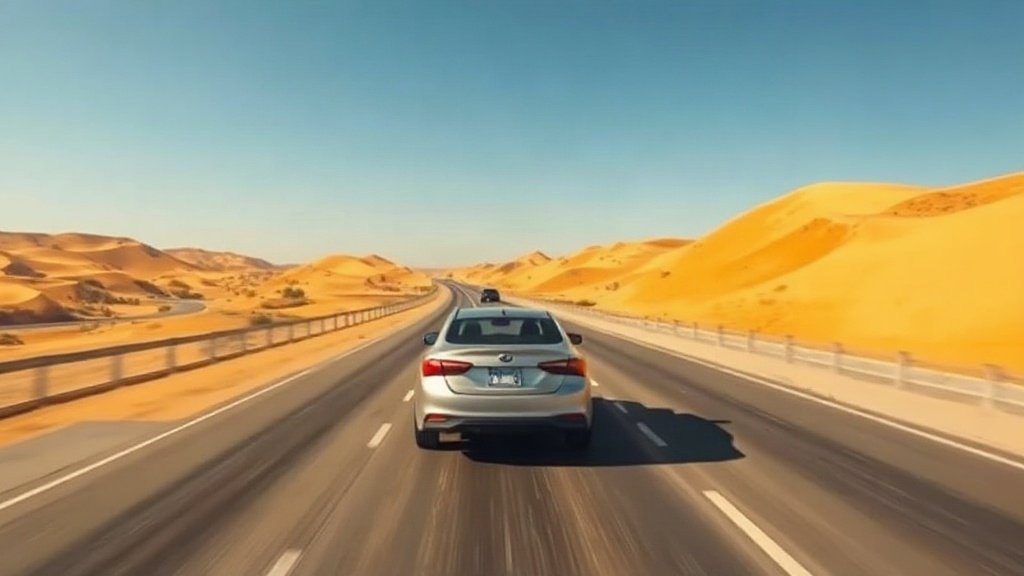
Illustration: AI-generated image
Renting a car in the Gulf gives you the freedom to explore beyond the cities, from mountain roads to desert highways. The region’s excellent road network, cheap fuel, and clear signage make self-driving a popular choice for visitors. Here is a straightforward guide to getting on the road.
What you need to rent
Most rental companies require a valid driving licence, a passport, and a credit card for the deposit. Visitors from many countries can drive with their home licence for a limited period, but an International Driving Permit (IDP) is often recommended and sometimes mandatory. Check the specific rules for the country you plan to visit – the UAE, Saudi Arabia, Qatar, Kuwait, Bahrain, and Oman each have their own regulations. Age limits usually start at 21, though drivers under 25 may face a young-driver surcharge.
Rules of the road
Across the Gulf, driving is on the right-hand side of the road. Seatbelts are compulsory for all passengers, and using a mobile phone while driving is strictly prohibited. Speed limits are clearly posted and enforced with cameras; fines can be heavy. In built-up areas limits are typically 40–60 km/h, on major urban roads 80–100 km/h, and on motorways 100–140 km/h. Be especially careful in school zones and near pedestrian crossings. Drink-driving is zero-tolerance in every Gulf country, with severe penalties.
Tolls and fines
Some cities have electronic toll systems. Dubai uses Salik, Abu Dhabi has Darb, and Doha operates a similar scheme. Rental cars are usually fitted with a tag, and tolls are charged to your account automatically. Ask the rental company how tolls are billed before you leave. Parking fines and traffic violations are also often passed on to the renter, sometimes with an administrative fee. Always pay for parking where required and avoid illegal stopping.
Fuel and parking
Fuel is inexpensive compared to Europe and North America, and petrol stations are plentiful on main roads. Most are self-service, and attendants may assist in some countries. Parking in city centres can be challenging; look for paid zones and multi-storey car parks. In residential areas, avoid blocking driveways or parking on pavements. Free parking is common in malls and hotels, but always check signs for time limits.
Long-distance driving
The Gulf’s motorways are well maintained and connect major cities, with rest stops and service stations every 50–100 km. Keep an eye on the fuel gauge, as distances between towns can be long in desert areas. In summer, plan drives for early morning or evening to avoid extreme heat, and carry water. Sandstorms can reduce visibility suddenly – slow down and use hazard lights if necessary. For trips across borders, check visa and car insurance requirements in advance; many rental companies restrict cross-border travel.
With a little preparation, hiring a car in the Gulf is a straightforward way to see more of this fascinating region. Drive safely and enjoy the journey.