Petra, Jordan: A Practical Guide to the Rose City
Everything you need to know before visiting Petra, from the walk through the Siq to the climb to the Monastery.
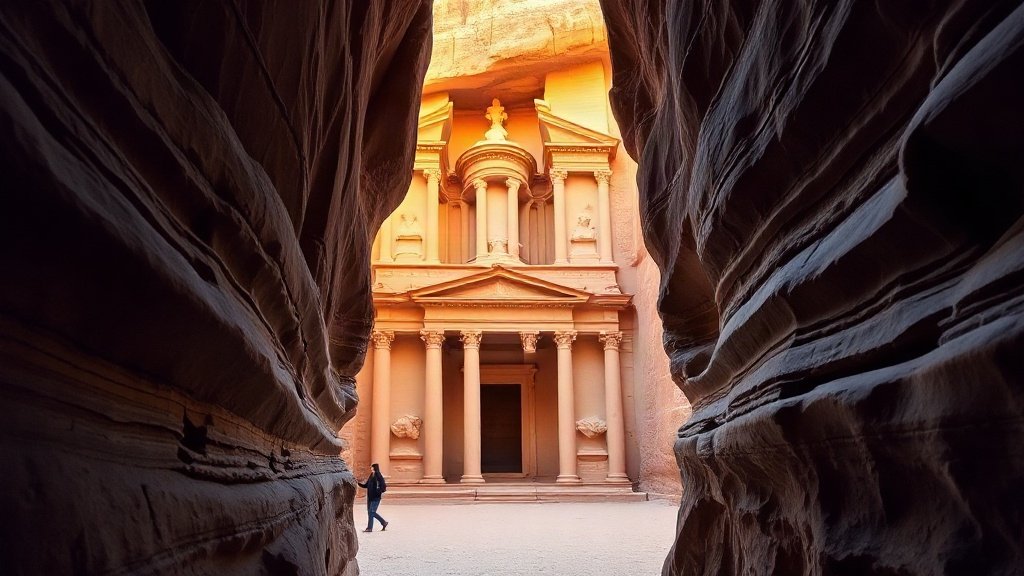
Illustration: AI-generated image
Carved into rose-red sandstone cliffs in southern Jordan, Petra is one of the most remarkable archaeological sites in the world. Built by the Nabataeans more than 2,000 years ago, this ancient city was a thriving trade hub, and its elaborate tombs and temples still stand as a testament to their engineering and artistry. For many visitors to the Gulf region, Petra makes an easy and rewarding side trip, offering a complete change of scenery from the desert landscapes of the Arabian Peninsula.
Getting to Petra
Petra is located near the town of Wadi Musa, about a three-hour drive south of Amman and two hours north of Aqaba. Most visitors fly into Amman or Aqaba and travel by road. There are regular bus services from Amman, and private transfers or rental cars are widely available. If you are coming from the Gulf, several airlines offer flights to both Amman and Aqaba, and the site is well signposted from the main highways.
Best time to visit
The best months to visit Petra are March to May and September to November, when daytime temperatures are mild and the sun is less intense. Summer can be extremely hot, especially in the canyon areas, while winter nights are cold and occasional rain can make the rocky paths slippery. Whatever the season, aim to arrive early in the morning to experience the site before the tour groups and the midday heat.
Exploring the site
The main entrance to Petra leads you down the Siq, a narrow gorge that winds for about 1.2 kilometres between towering cliffs. At the end of the Siq, the path opens up to reveal the Treasury (Al-Khazneh), Petra's most iconic monument. From there, the site spreads out across a valley filled with tombs, temples, and a Roman-style theatre. The walk from the visitor centre to the Treasury takes around 30 minutes at a steady pace, but allow much longer if you plan to explore the wider area.
For many visitors, the highlight is the climb to the Monastery (Ad Deir), a monumental building similar in style to the Treasury but larger and less crowded. The trail involves around 800 steps carved into the rock and takes about an hour each way. The views from the top are spectacular, and there are shaded spots to rest and take in the panorama over the surrounding valleys.
What to wear and bring
Petra is an outdoor site with uneven ground and long walks, so comfortable, closed-toe shoes are essential. Dress in layers, as the temperature can vary significantly between the shaded Siq and the open sun. A hat, sunglasses, and a refillable water bottle are a must, as there is little shade on the main trails. Modest dress is appreciated throughout Jordan, so shoulders and knees should be covered.
Practical tips
- Allow at least one full day to see the main sights, but two or three days are better if you want to explore less-visited trails such as the High Place of Sacrifice.
- Stay hydrated and carry snacks, though there are small shops and tea stands inside the site.
- Wear sunscreen and reapply during the day, as the reflection off the rock can be intense.
- Respect the site by not climbing on monuments or touching carved surfaces; oils from skin can damage the stone.
- Hire a local guide if you want deeper insight into Petra's history and hidden corners; guides are available at the visitor centre.
Petra is more than just a photo stop. It is a place to walk slowly, imagine the caravans that once passed through, and appreciate the remarkable way the Nabataeans shaped this landscape. With a little planning and the right footwear, it is a journey worth every step.