Nizwa, Oman: A Practical Guide to the Fort and Souq
Discover the ancient fort, bustling souq and timeless traditions of Nizwa, one of Oman's most historic cities.
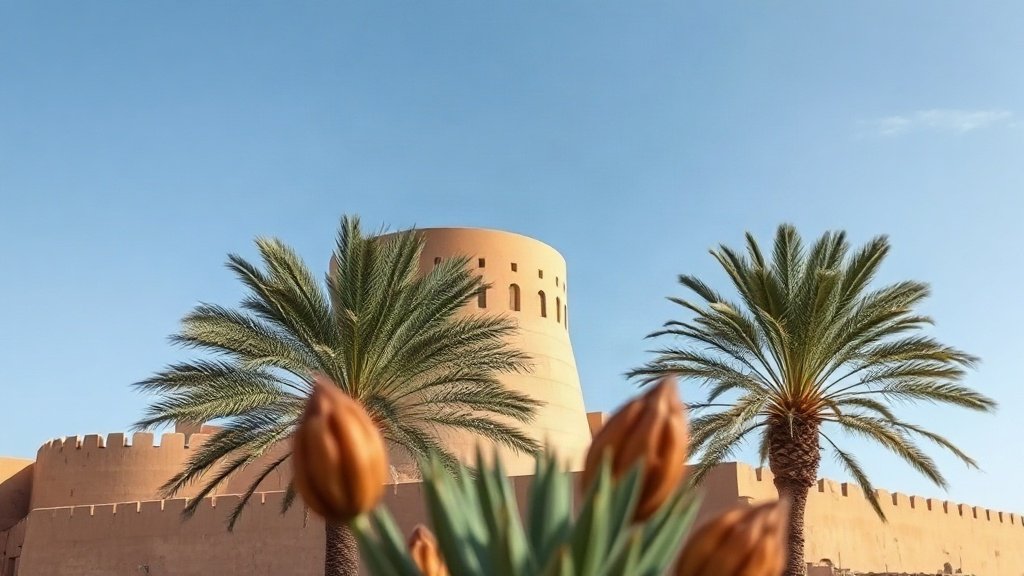
Illustration: AI-generated image
Nizwa, once the capital of Oman, is a city that wears its history with quiet pride. Nestled at the foot of the Hajar Mountains, it offers visitors a chance to step back in time and experience the heart of Omani culture. Whether you come for the imposing fort, the lively souq or the famous Friday cattle market, Nizwa rewards curiosity and a respectful spirit.
Getting to Nizwa
Nizwa lies about 160 kilometres from Muscat, a drive of roughly an hour and a half along the well-maintained Route 15. The road climbs gradually from the coast, passing through rocky landscapes and small towns. Many travellers visit Nizwa as a day trip from the capital, but staying overnight allows you to see the souq at its most atmospheric and to catch the cattle market at dawn. If you are driving yourself, fill up on fuel before leaving Muscat, as distances between petrol stations can be long.
Nizwa Fort: A Masterpiece of Omani Architecture
The centrepiece of the city is Nizwa Fort, built in the 1660s under Imam Sultan bin Saif Al Ya'rubi. Its most striking feature is the enormous round tower, 30 metres in diameter and 34 metres high, which is one of the largest of its kind in the Arabian Peninsula. The fort was designed to defend the city and its oasis, and its walls are thick enough to withstand cannon fire. Inside, you can wander through a maze of rooms, staircases and battlements. Climb to the top of the tower for sweeping views over the date palm plantations and the mountains beyond. Look out for the traditional falaj irrigation channels that still water the surrounding groves.
Wandering the Souq
Next to the fort lies the restored souq, a network of covered lanes that buzzes with activity. The eastern section is dedicated to fruit, vegetables and meat, while the western side is known for handicrafts and silver. You will find khanjars (traditional curved daggers), Bedouin jewellery, pottery from nearby Bahla, and baskets woven from palm fronds. Dates are a local speciality; Nizwa's oasis produces some of the finest varieties in the country. Take time to chat with shopkeepers — a friendly greeting in Arabic goes a long way, and bargaining is expected, though always with good humour.
The Friday Cattle Market
Every Friday morning, just after sunrise, locals gather at the livestock market near the souq. This is not a tourist show but a working market where farmers buy and sell goats, sheep and cattle. Visitors are welcome, but it is essential to dress modestly and to keep a respectful distance from the animals and traders. The atmosphere is lively and noisy, with much animated conversation. Arrive early, around 7 am, to see the most activity. Photography is generally tolerated, but always ask permission before taking close-up pictures of people.
Practical Tips for Your Visit
- Dress respectfully: men and women should cover shoulders and knees. Light, loose cotton fabrics are ideal for the heat.
- Visit the fort in the morning or late afternoon to avoid the midday sun; the fort's thick walls offer some shade, but the rooftop can be hot.
- Carry water with you, especially if you plan to walk through the souq and surrounding lanes.
- Combine Nizwa with nearby Bahla Fort (a UNESCO World Heritage Site) or a drive up to Jebel Akhdar if time allows.
- If you visit on a Friday, be aware that many shops outside the souq may close for the midday prayer.
Nizwa is a city that moves to an older rhythm. Allow yourself time to sit with a cup of Omani coffee, watch the world go by, and appreciate a place where tradition is not a museum piece but a living part of daily life.