Liwa Oasis: a practical guide to Abu Dhabi's desert heartland
Discover towering dunes, date farms and historic forts in this remote oasis at the edge of the Empty Quarter.
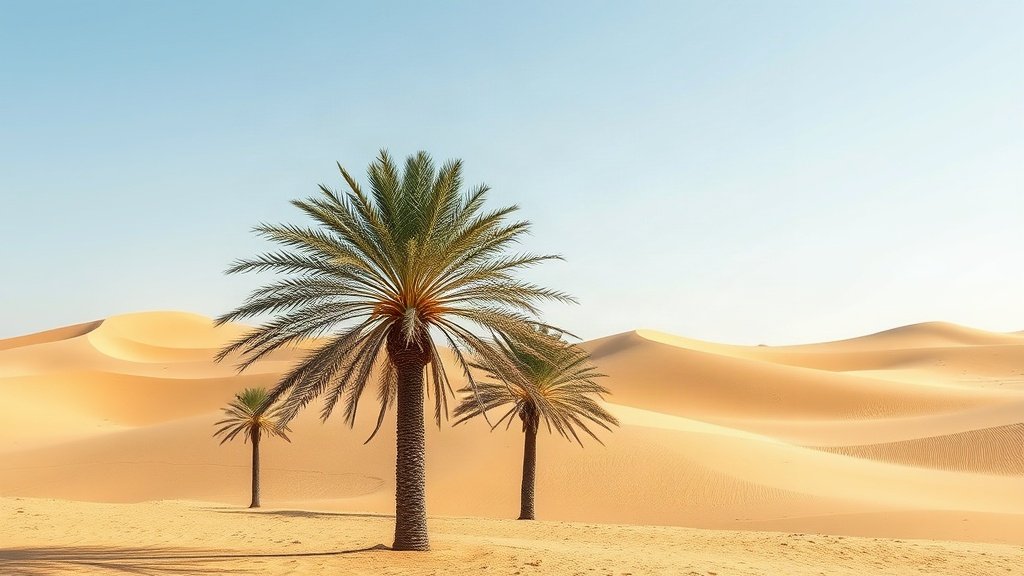
Illustration: AI-generated image
Liwa Oasis is a crescent of small settlements and date plantations stretching for more than 100 kilometres along the northern edge of the Rub' al Khali, the vast sand desert known as the Empty Quarter. It lies about 250 kilometres south-west of Abu Dhabi city, close to the border with Saudi Arabia, and feels a world away from the coastal cities. For travellers who want to see the great dunes of Arabia without an expedition, Liwa is the easiest place to do it.
Where Liwa is and how to get there
The oasis is in Abu Dhabi's Al Dhafra region. The main road from Abu Dhabi city, the E11, heads south-west to Tarif, then the E45 continues directly to Liwa. The drive takes around two and a half to three hours. There is no public transport to Liwa, so you need a car. A four-wheel drive is recommended if you plan to drive into the dunes, but a normal saloon car is fine for the main roads and the oasis villages if you stay on tarmac.
What to see in Liwa
Liwa is best known for its dunes, particularly Moreeb Dune, which is one of the tallest in the UAE at around 300 metres. It is about 25 kilometres south of the main Liwa settlement of Mezairaa. Even if you do not drive up it, seeing the dune rise from the flat gravel plain is impressive. Nearby, the Liwa Date Festival takes place every July, celebrating the harvest from the region's many date farms, but the farms themselves can be visited year-round and give a sense of how the oasis has supported life for centuries.
The area is dotted with old forts and watchtowers, many restored. Dhafeer Fort in Mezairaa and Al Hayl Fort are among the most accessible. They offer a glimpse of traditional defensive architecture and views over the palm groves. For a deeper look at local heritage, the Liwa Oasis Rest House area has a small museum and traditional buildings, but note that opening arrangements can change, so check locally before visiting.
Best time to visit
The cooler months from November to March are the most comfortable. Summer temperatures regularly exceed 45°C, and outdoor activity is not advisable between midday and late afternoon. If you visit in winter, bring a light jacket for the evenings, as desert nights can be surprisingly cool.
Practical tips
- Fuel up before you leave: There are petrol stations in Liwa town, but they are spread out. Fill your tank in Abu Dhabi or Tarif to be safe.
- Carry water and snacks: Shops exist in the villages, but options are limited.
- Respect the desert: Do not drive off established tracks unless you have a guide and know how to handle soft sand. Tyre tracks damage the fragile desert surface.
- Stay overnight: Liwa has a few hotels and desert camps, but book ahead, especially on weekends and public holidays. Camping in the open desert is possible but requires a permit and careful preparation.
- Mobile signal: Coverage is generally good near the villages but can disappear in the deeper dunes, so download offline maps before you go.
Liwa is not a place for hurried sightseeing. It rewards slow travel: a walk through a palm garden, a cup of tea with a view of the dunes, and a sunset that turns the sand from gold to deep red. If you have a free weekend and a sense of adventure, it is one of the best desert escapes in the Emirates.