Falaj Irrigation Systems in Oman: A Practical Guide to Ancient Water Channels
Discover Oman's ingenious desert water systems, centuries old and still flowing. Here's what a falaj is, where to see remarkable examples like Falaj Daris, and how to visit respectfully.
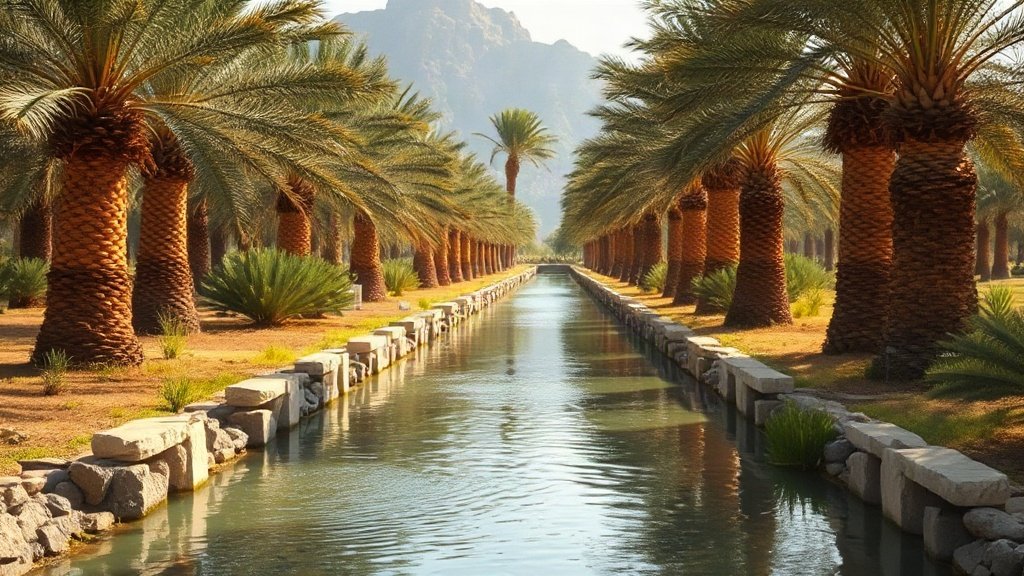
Illustration: AI-generated image
In the arid landscapes of Oman, water is life. For thousands of years, communities have relied on an ingenious network of channels called falaj (plural aflaj) to bring water from mountain springs to villages and date palm groves. These gravity-fed systems are not only a feat of ancient engineering but also a living tradition, with some aflaj still managed by local communities today. Visiting a falaj offers a unique glimpse into Oman's rural heritage and the practical wisdom of its people.
What is a falaj?
A falaj is a man-made channel that taps into underground water sources, often in the mountains, and carries it downhill across long distances. The word falaj comes from an Arabic root meaning "to divide", reflecting how water is shared among users. Unlike a simple canal, a falaj can include tunnels, shafts and surface channels, with precise gradients to keep water flowing at a steady, manageable pace. Some aflaj stretch for several kilometres, and their construction required immense skill and communal effort.
Where to see remarkable falaj systems
Oman has thousands of aflaj, but a few stand out for their scale, history and accessibility. One of the most famous is Falaj Daris in Nizwa, which is part of the UNESCO World Heritage listing "Aflaj Irrigation Systems of Oman". It has been cited in local traditions as a source of life for centuries. Another notable example is Falaj Al Khatmain in Birkat Al Mouz, near the foot of Jebel Akhdar, where you can see the water channel running through a lush oasis. For a more dramatic mountain setting, consider a short walk to see a falaj near the village of Misfat Al Abriyeen, where the channel passes between stone houses and terraced gardens.
How a falaj works
The principle is simple but elegant. A deep well or mother well is dug into an aquifer, often on a hillside. From there, a gently sloping tunnel carries the water by gravity to the surface at a lower point. The water then flows through open channels to farms and homes. Distribution is carefully regulated: a rotation system ensures that each family or plot gets its allotted share, often measured by time or volume. This system reflects a deep respect for fairness and sustainability, values that remain central to Omani culture.
Tips for visiting a falaj
- Wear comfortable walking shoes, as paths along the channel can be uneven and narrow.
- Be mindful that the water is used for drinking and irrigation; do not wash hands or feet in it, and avoid dropping litter.
- Aflaj are still working systems; you may see local people tending their plots. Greet them politely and ask before taking photographs of people.
- Combine a falaj visit with a stroll through the adjacent date palm oasis, which offers shade and a sense of the traditional agricultural landscape.
- Early morning or late afternoon light makes for beautiful photographs of the water and greenery against the arid mountains.
A living heritage
Beyond their practical function, aflaj are social institutions. They are maintained by local communities, often through a system of traditional knowledge passed down generations. The recognition of several Omani aflaj as UNESCO World Heritage in 2006 highlighted their global significance as an outstanding example of a sustainable water management system. Visiting a falaj is not just about seeing an old water channel; it is about understanding how people have thrived in a harsh environment through cooperation and ingenuity.
Whether you are a history enthusiast, an engineering buff, or simply a traveller seeking authentic experiences, exploring a falaj adds a rewarding layer to any Omani itinerary. These quiet, flowing channels tell a story of resilience and harmony with nature that resonates long after you leave.