Clay and Fire: The Enduring Craft of Traditional Gulf Pottery
From cooling water jars to ornate incense burners, pottery has been a cornerstone of Gulf daily life for centuries. Discover the techniques, forms, and cultural significance of this timeless craft.
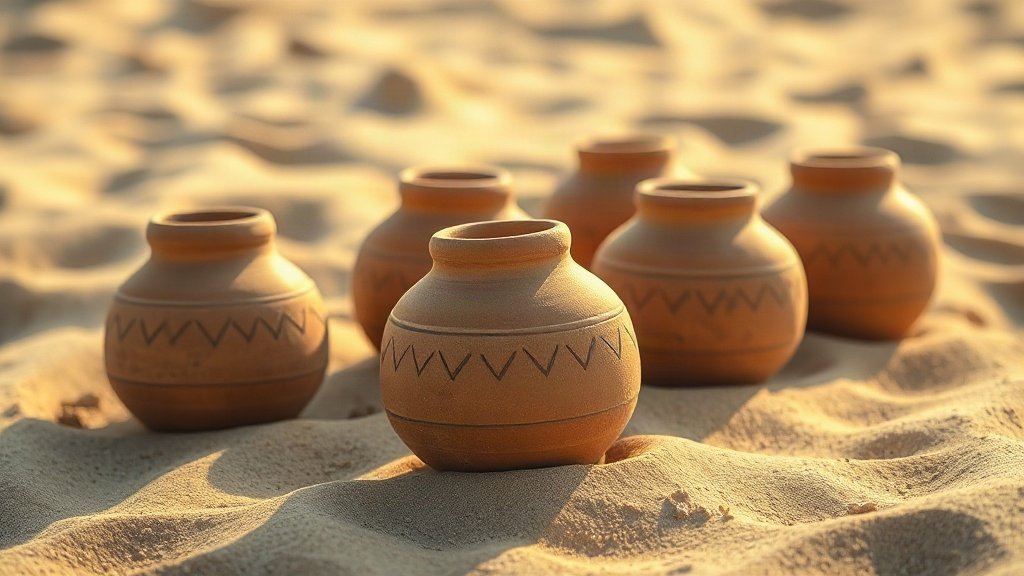
Illustration: AI-generated image
Before the age of plastic and stainless steel, the people of the Arabian Gulf shaped their daily lives from the earth beneath their feet. Traditional pottery, crafted from locally sourced clay, served as water coolers, cooking pots, and incense burners. Today, this ancient craft survives as both a functional art and a living link to the region’s past.
A Craft Rooted in Necessity
In the harsh desert climate of the Gulf, pottery was not a luxury but a necessity. Clay vessels kept water cool through evaporation, stored grains and dates, and were essential for cooking. The most iconic form is the hib or hubb, a large unglazed water jar with a narrow neck, designed to be porous so that water seeps slowly to the surface, cooling the contents inside. Similarly, the jahlah or storage jar preserved dates for months, while smaller pots held spices, oils, and medicines.
Potters also produced items tied to ritual and hospitality. The mabkhara, or incense burner, was often made of clay and decorated with simple geometric patterns, used to burn bukhoor (frankincense or scented wood chips) in homes and majlis gatherings. These objects were not merely utilitarian; they carried cultural meanings of welcome, purity, and tradition.
Techniques Passed Down Generations
Traditional Gulf pottery is hand-built, using techniques that have changed little over centuries. Potters dig clay from local wadis or coastal deposits, then knead it with sand or grog (crushed fired clay) to improve durability. The vessel is formed either by coiling long ropes of clay and smoothing them together, or by shaping a lump on a simple kick wheel. After drying in the shade for several days, the piece is fired in a shallow pit or a beehive kiln, often fuelled by palm fronds or dried dung.
Decoration is usually minimal, reflecting the functional nature of the objects. Some pots are incised with wavy lines or dotted patterns using a comb or shell, while others are burnished with a smooth stone to create a subtle sheen. Glazes were historically rare, though later periods saw the introduction of turquoise and green glazes influenced by trade with Persia and Mesopotamia.
Regional Styles and Centres
While pottery was produced across the Gulf, certain areas developed distinct reputations. In Oman, the town of Bahla has been famous for its pottery for centuries, with its clay vessels and incense burners sought after throughout the region. In Saudi Arabia, the eastern oasis of Al-Ahsa produced simple, robust water jars, while coastal communities in Bahrain and Kuwait made fishing-net weights and storage jars. Each region adapted to local clay sources and needs, resulting in a rich variety of forms and finishes.
Pottery in Gulf Culture Today
Although modern materials have replaced most everyday ceramics, traditional pottery remains a cherished heritage craft. Artisans in Oman, Saudi Arabia, and the UAE continue to produce pieces for tourists and collectors, and workshops are often part of cultural festivals and heritage villages. Museums across the Gulf display ancient and historic pottery, providing insight into trade routes and daily life. For visitors, buying a handmade clay pot or watching a potter at work offers a tactile connection to a tradition that has shaped the region’s identity for millennia.