Bahrain Fort: A Practical Guide to the Gulf's Ancient Dilmun Capital
Discover Qal'at al-Bahrain, a UNESCO World Heritage Site that layers 4,000 years of history, from the Dilmun civilization to a Portuguese fort, all within easy reach of Manama.
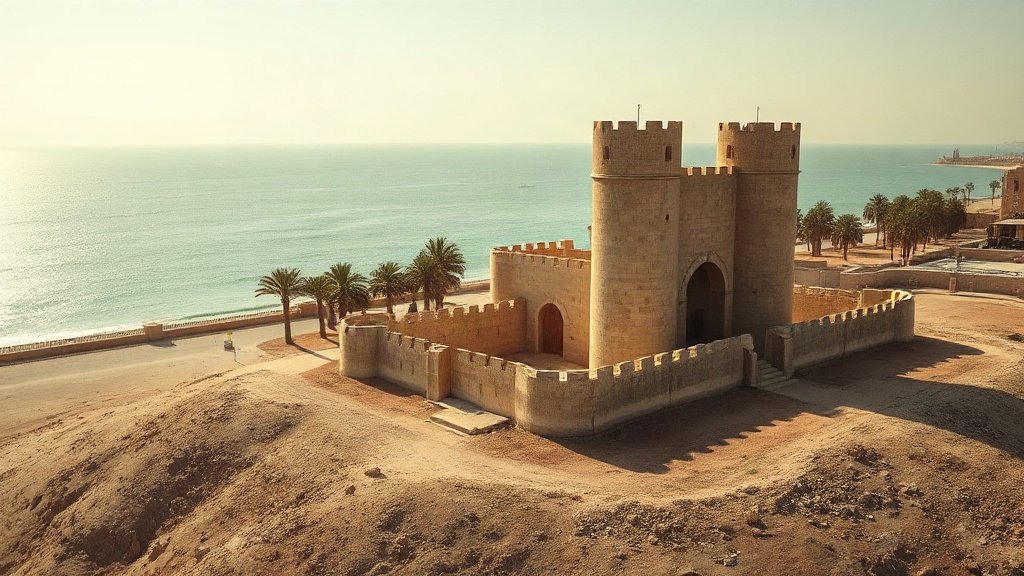
Illustration: AI-generated image
Rising above the northern coast of Bahrain, Qal'at al-Bahrain – known simply as Bahrain Fort – is one of the Gulf's most remarkable archaeological sites. This UNESCO World Heritage Site is not just a single fortress but a vast artificial mound built up over millennia, holding the remains of successive civilisations that once thrived here. For visitors, it offers a rare chance to walk through layers of history while enjoying sweeping views of the sea and surrounding palm groves.
A Brief History
The site's story begins around 2300 BC, when it served as the capital of the ancient Dilmun civilisation, a trading power that linked Mesopotamia with the Indus Valley. Over centuries, the mound grew as new settlements were built atop the old, leaving behind a rich archaeological record. The most prominent structure today is the fort itself, which dates mainly from the 16th century, when the Portuguese occupied Bahrain and refortified the site. Beneath its walls lie earlier Islamic and pre-Islamic layers, making this a true cross-section of Gulf history.
What to See
Visitors can explore the fort's well-preserved ramparts, towers, and internal chambers, many of which offer shade from the afternoon sun. The surrounding archaeological park includes excavated residential and commercial quarters from the Dilmun era, where you can see the foundations of ancient houses and streets. An on-site museum displays artefacts found during excavations, including pottery, seals, and metalwork that illustrate daily life and long-distance trade. The site is particularly atmospheric at sunset, when the stone glows golden and the call to prayer from a nearby mosque drifts over the walls.
Getting There and Practical Tips
Bahrain Fort lies about 6 km west of central Manama, in the village of Karbabad. It is easily reached by car or taxi, and there is parking near the entrance. The site is open daily, but it is wise to visit in the cooler morning or late afternoon, especially between May and September. Wear comfortable shoes for walking on uneven ground, and bring water and sun protection. Modest dress is appreciated, as at any heritage site in the Gulf. While guides are not always required, hiring one or using the museum's information panels will greatly enrich your understanding of the site's layered past.
Combining a visit here with a stop at the nearby Bahrain National Museum or a stroll through the traditional houses of Muharraq makes for a full day of cultural discovery. Bahrain Fort may not have the fame of Petra or the Empty Quarter, but its quiet grandeur and deep history make it a must-see for anyone interested in the roots of the Gulf.