Bahla Fort, Oman: A Practical Guide to the Desert Oasis Fortress
Discover Bahla Fort, Oman's largest and most atmospheric mud-brick fortress, a UNESCO World Heritage Site steeped in legends and history.
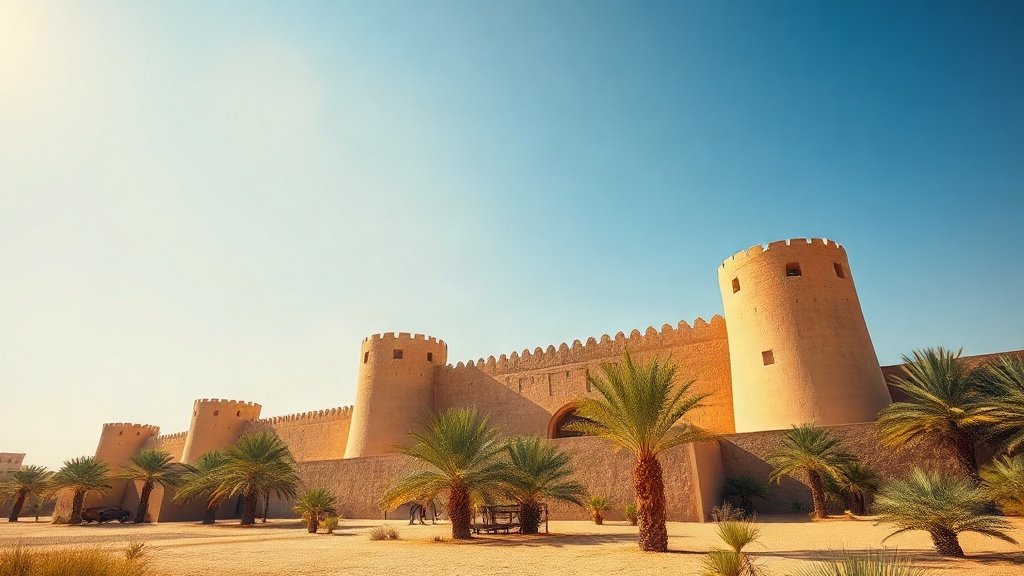
Illustration: AI-generated image
Rising from the edge of a lush palm oasis at the foot of the Jebel Akhdar mountains, Bahla Fort is Oman's most impressive mud-brick fortress and a monument to the country's rich defensive heritage. This sprawling complex, surrounded by a wall that once stretched for 12 kilometres, has been a UNESCO World Heritage Site since 1987 and offers visitors a captivating glimpse into medieval Omani life.
Getting There
Bahla lies about 40 kilometres west of Nizwa and roughly 200 kilometres southwest of Muscat. The fort is easily reached by car along the main highway, and the drive itself offers scenic views of date plantations and rugged mountains. Public transport is limited, so hiring a vehicle or joining an organised tour from Nizwa or Muscat is the most practical option. The fort is located in the centre of the old town, and signposting is clear.
Exploring the Fort
The fort complex is a labyrinth of towers, courtyards, narrow passageways and residential quarters, all constructed from traditional mud brick and palm-trunk beams. Unlike many restored historical sites, Bahla retains an authentic, slightly crumbling atmosphere that adds to its mystique. Visitors can climb several of its towers for panoramic views over the oasis and the surrounding mountains. Look out for the intricate carved wooden doors and the remains of old wells and water channels that once sustained the garrison.
Insider tip: The fort is particularly atmospheric in the late afternoon, when the low sun warms the mud walls and the call to prayer echoes from the nearby mosque.
The Surrounding Oasis
Bahla's fame extends beyond the fort itself. The town is renowned for its pottery, a craft that has been practised here for centuries. Stroll through the old souq area, where you may see potters at work and can admire the traditional unpainted clay pots. The oasis behind the fort is crisscrossed by falaj irrigation channels, a testament to the ingenuity of ancient Omani farmers. A short drive away is the abandoned village of Al Hamra and the nearby Jabrin Castle, another impressive mud-brick stronghold worth combining with a visit to Bahla.
Practical Tips
- Dress comfortably: Expect uneven steps and dusty surfaces; sturdy walking shoes are advisable.
- Stay hydrated: The region can be very hot, especially in summer; bring water and a hat.
- Check opening arrangements locally: As restoration works occasionally close parts of the site, it is wise to confirm access before travelling.
- Combine with other sites: Nizwa Fort, Jebel Akhdar and Misfat Al Abriyeen are all within an easy drive, making Bahla a perfect stop on a longer road trip.
Bahla Fort offers a rare chance to step back in time and experience the scale and skill of Omani defensive architecture. For travellers seeking history beyond the glossy museums, this desert fortress is an unmissable highlight of interior Oman.