Al-Razfa: The Gulf's Rhythmic Stick Dance of Community and Pride
Discover the origins and steps of Al-Razfa, a traditional stick dance performed across the Arabian Gulf at weddings and national celebrations.
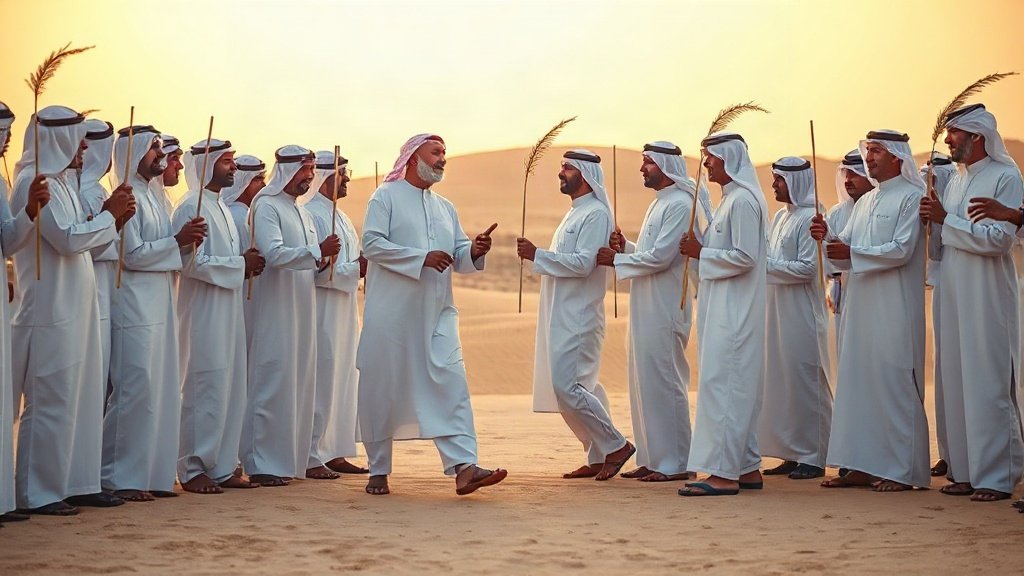
Illustration: AI-generated image
Al-Razfa is a traditional performing art found across the United Arab Emirates, Oman, and parts of Saudi Arabia. It is a communal dance that combines poetry, rhythm, and synchronised movement, typically performed by men at weddings, Eid celebrations, and national events. The name comes from the Arabic word for "to line up" or "to stand in rows," reflecting the formation of participants.
The dance involves two rows of men facing each other, holding thin sticks often made from palm fronds or bamboo. A lead singer or poet recites verses, usually in the Nabati (vernacular) style, while the rows sway and step in time to a drumbeat. The sticks are sometimes clashed together or swung in rhythmic patterns, but the emphasis is on unity and discipline rather than aggressive display.
How Al-Razfa is Performed
Participants stand shoulder to shoulder in two facing rows. A drummer or several set the beat, often using a large drum called a "ras" or "tabl." The lead chanter recites lines of poetry, and the rows respond in unison, repeating key phrases. Movements include stepping forward and back, swaying side to side, and occasionally raising the sticks overhead. The basic step is a simple forward-and-back shuffle, with the weight shifting from foot to foot in time with the beat. The dance builds in intensity, with the tempo increasing as the performance progresses.
Origins and Cultural Meaning
Al-Razfa is believed to have Bedouin roots, possibly linked to war dances or displays of tribal solidarity. Over time, it evolved into a celebratory form that reinforces social bonds. It is often performed to welcome guests, honour dignitaries, or mark important communal milestones. The poetry typically praises the tribe, the nation, or the occasion, and can include spontaneous call-and-response verses. One notable cultural value is that all men stand in the same row regardless of social status, promoting a sense of equality and brotherhood.
Where to Experience Al-Razfa
You can see Al-Razfa at cultural festivals, heritage villages, and national day celebrations across the Gulf. In the UAE, for example, it is commonly performed during National Day festivities and at traditional weddings. Many cultural centres and museums also host demonstrations. The dance is typically accompanied by traditional dress: men wear the white thobe and ghutra, sometimes with a bisht for special occasions. The sticks are simple but symbolic, representing unity and strength.
Al-Razfa is a living tradition that continues to be passed down through generations, offering a window into the Gulf's rich intangible heritage. Whether you encounter it at a wedding or a festival, the rhythmic beat and collective movement are sure to leave a lasting impression.